Thursday, 1 February 2018

Britain's Favourite Walks: Top 100

This was a rapid countdown of something you should actually take time over; definitely more of a sprint than a ramble. The whole point of walking is that you don't get there quickly. You savour the view. But this programme didn't do that. For most of the 100 walks you got a brief voiceover, a red outline on a map and a fleeting shot of drone footage. And then - whoosh! - you were off to the other end of the country and the next walk on the list. There wasn't even time to scribble down the start and end points. Surely the 100 walks could have been spread over two or three programmes? Maybe ITV didn't trust its viewers to be interested enough in hiking to warrant devoting more than a single evening to it. But anyway, at least the list is now there on the Ordnance Survey website for you to spend as much time and effort on as you wish.

The programme was presented by Britain's most annoying walker, Julia Bradbury, queen of the stupid question and not listening to the answer. She of the super robotic fitness, perfect hair, large watch and immaculate hiking gear. All right, I admit that I may be a tiny bit jealous. For I'm the one barely able to draw breath as I plod up the slightest incline, and I like to feel among friends in the rambling community. I bet Julia Bradbury's children don't moan as much on country walks as mine either. Our daughter's unbearable whining is the main contributing factor to my lack of hiking shape. Julia's fellow presenter and Strictly winner Ore Oduba came across as far more human and smiley-friendly, but he didn't feature nearly enough in the half of the show that I watched. His kid isn't old enough to have started moaning yet, by the way.

The programme did slow down a bit as you reached the top 10. And you met some pretty amazing hikers - the quadruple amputee, who lost his hands and feet after getting frostbite in an accident in the Alps, now climbing Snowdon in some slightly tactless snow. The guy with Alzheimer's who climbs Coniston Old Man over and over again to stave off the memory loss and disorientation that the disease brings. And the lady with vertigo who huffed and puffed her way along three miles of Hadrian's Wall, just because she reminded me of me.

I was pleased to see how many of the walks I had at least done a part of, though there were plenty on the list I've not yet attempted, from the biggies like Ben Nevis and Scafell Pike to the longies like the Coast to Coast, Ridgeway and the West Highland Way, or even the shorties in places like the Peak District, Malvern Hills and Northern Ireland, where I have barely managed to spend any time at all.

As for the winner, Helvellyn, it was clearly a surprise to the programme makers. Because it's a bloody hard mountain to climb, although it has its easier and trickier options. But Helvellyn is certainly what I would class as my own "most memorable" walk. As an eight-year-old, for some reason I became obsessed with Striding Edge, one of two serious ridges that lead to the summit. It must have been my dad who told me about Striding Edge, the fool or overenthusiastic Cumbrian mountaineer, depending on your point of view. Anyway, I wanted to see it so badly and climb and conquer it myself. So during one of our frequent visits to Grasmere, my dad and grandfather happily offered to take me up Helvellyn via Striding Edge. What on earth were they thinking? I didn't know as much about my grandfather then as I do now. Back then he was still a few peaks short of completing all the British hills over 2000 feet (I realise this scans like "few sandwiches short of a picnic") and was still busy working in his hiking shop and running his holiday cottages. I didn't know then that he had nearly killed my grandmother several times on hikes in their youth, most notably crawling along the ridge of Aonach Egach in a storm.

And Striding Edge was to be my Aonach Egach, only - as I was only eight - without the fear factor. We set off from Glenridding, and the first bit of the walk was a long but uneventful trudge. There was plenty of cloud above us, but the visibility was good enough. We sat and ate our sandwiches beside Red Tarn before the big ascent up to Striding Edge. And then within an instant, the bad weather hit. The gale force struck as high as my age, completely whipping our breath away, as well as ripping a five pound note out of my father's pocket, which in 1981 was quite a considerable loss to a frugal Dodgson. The mist became thick and impenetrable, swirling around us and entirely destroying the view. We could barely see more than a metre in front of us. On top of a knife-edge ridge, this isn't necessarily a bad thing, as you can't see how far you have to fall. My grandfather, however, quickly realised that he had a scrappy little kid with him who would not be safe on that knife-edge, so we went down a few metres and started to walk along the path that goes below but alongside the actual ridge. At first this wasn't so bad as we had dropped down out of the wind, which was buffeting against the other side of the rocks. But as the expert hiker on the programme warned, walking along the side paths of Striding Edge can actually lead you into more trouble than going along the top. Suddenly, in a gap between the rocks, the path crossed over into the full force of the wind. For all we could see in front of us, it seemed that our only option was to scramble up the sheer rock face of a crag to reach the next stage of the path up to the summit. This was just too dangerous, and we had to retreat. I was so disappointed to have not made it to the top, but even my gung-ho grandfather realised it would have been foolish and completely irresponsible to continue. The visibility was so bad, I have no idea how far along Striding Edge we got or how much further there was to go.

We re-climbed Helvellyn as a family, minus my grandfather but with the addition of my mum and brother, a couple of years later. This time we took the route from Thirlspot, which avoids all of the daredevil approaches altogether. It was a sunny, uneventful day. The path up from Thirlmere is quite steep and a hard slog, but eventually we reached the top, my little brother assisted by an entire packet of Fox's Glacier Mints. But at least my obsession with Striding Edge had been cured, until we picked a ceilidh band with the same name to play at our wedding. But it turned out that they were much safer. There is no way in hell (unless it froze over or indeed "vel-yn..." (fell in, geddit?)) I would go along Striding Edge now. At least our daughter would have to have a personality transplant before she develops a similar obsession.

As for the other walks in the top 100, here are a few of my other personal highlights:

1. Cat Bells (number 4 on the list)

I so desperately want to climb Cat Bells again. I was probably younger than our daughter when I first went up it, and I remember loving its bumpy up-and-downness, something I'd probably hate now. Why gain height only to lose it again? But I've heard rumours that there is a cake shop at the top. Some students opened it. Just because every child is told to keep going because there will be a cake shop at the top. And there never was. But now there really is. Talk about cornering the market. Alas for now this is as close as we've got to the top:


If only the weather in Keswick could always be that good.

Other Cumbrian walks in the top ten included the circular path round Buttermere (number 7) and the Coffin Route from Ambleside to Grasmere via Rydal (27), which was my grandmother's daily walk to school:


Buttermere

Looking across to the coffin route from Rydal Water


2. Snowdon (number 2)

I climbed Snowdon for one of my 40 challenges for turning 40. Only we went on a train with a screaming toddler in tow who chose that moment (despite 3,000 previous trips to the National Railway Museum) that she hated steam engines. The actual summit was shrouded in cloud, but the views up until that point had been incredible.


3. Solva to St David's (number 16)

We went to Pembrokeshire when our daughter was two and three quarters, and fell in love with its coastal path. For it is exhilaratingly beautiful. Our holiday cottage was just a few hundred yards from the route, where it passed through a smugglers' cove before re-ascending the cliffs. We took turns in the long June evenings, once our daughter was in bed, to go out and walk as far as we dared before nightfall. We resolved to one day to do the whole walk, but we're still a long way from achieving that goal. We've never been able to face the long drive back to south Wales for starters. I mean, just how many "Are we nearly there yet?"s can you fit into a single stretch of the A487?

St David's

Aberfelin

Wildflowers on the coastal path

Another Welsh walk was the canal at Llangollen (60), where the boats are still pulled along by horses:


and the coastal path around Anglesey (32):


Menai Strait


4. Craster to Dunstanburgh Castle (number 9)

We love Northumberland. The first time I did this walk, I had left a very sunny Newcastle with a craving for the sea, only to find the sea vanished into fret when we reached the coast. We walked right past Dunstanburgh castle without seeing it, uttering the classic line "Well, it has to be around here somewhere...." Honestly, it was so near to us, standing beside the golf course at Embleton Sands, that we could have touched it.

Thankfully, the next two times I went, the view was clear. And what a view. Kippers in a restaurant at Craster are always the end to a perfect day.


Embleton Sands


Craster harbour

Other Northumberland walks on the list featured Kielder Water (59) and the St Cuthbert's Way to Lindisfarne and Holy Island (51):

Kielder

Holy Island

Lindisfarne


5. Whitby to Robin Hood's Bay (number 17)

I first did this walk with the University of York Outdoor Society, who organised hiking trips every Saturday morning. Mostly I failed to negotiate my way out of bed in time to join them, but very occasionally, I succeeded, and this particular time I was very glad to have made the effort. It was a glorious hike. On this trip I made a good friend, a funny, kind but troubled soul who a decade after we graduated chose to end her life by stepping in front of a train on the line between Coventry and Birmingham. This was unbearable, but I always remember her now in happier times whenever we go as a family to the Yorkshire Coast. We visit Whitby several times a year, in winter bleakness and summer crowds. Prowled by goths and vampires, fed by fishermen, departed by explorers, it has the steepest steps and the best chippies and Christmas trees in the country.

Finally now re-open after the fire last year


Christmas tree festival, St Mary's Church


Robin Hood's Bay we don't go to nearly enough, usually because the car park is full by the time we arrive. We are certainly owed a fossil hunt or two on its beaches.

Other Yorkshire walks included Grosmont to Goathland (39), which we have also only done by steam train (since our daughter doesn't mind them so much now):

North York Moors Railway

Hogsmeade Station


and Brimham Rocks (49), which my brother and I loved as kids. And now our daughter does too. Some may climb them but she imagines the rocks as houses with uncomfortable furnishings. The tea parties are long and tedious.

There was also Bempton Cliffs (50), home of thousands of seabirds and where I swallowed a piece of plastic fork:

and Richmond to Reeth (54):


and Grassington (61), where I have mostly frequented tea shops:


and finally, Gordale Scar and Malham Cove (3), which is about as spectacular a walk as you can do in the Yorkshire Dales, if not anywhere in the world. Unfortunately I haven't done it since I got a phone with a half-decent camera:

Malham Cove

We have a photo of my brother aged two standing in this sheep run


Gordale Scar

Janet's Foss


6. Arthur's Seat (number 43)

It's the best free thing to do in Edinburgh, although the National Museum of Scotland comes a pretty close second. The extinct volcano looms over Holyrood and the Royal Mile. That said, the only time I have climbed right to the top was with a colossal hangover after a wedding and - really lazily - we even took a taxi to the start of the walk. We haven't yet attempted to drag our daughter up it but will rectify this on our next trip.


Other walks in Scotland of course included Glen Coe to Fort William (number 14):


7. Norfolk

There were some delightful walks in Norfolk, including Wells-next-to-the-Sea (42) and Blakeney Point (68), timeless places to go crabbing and spot seals:
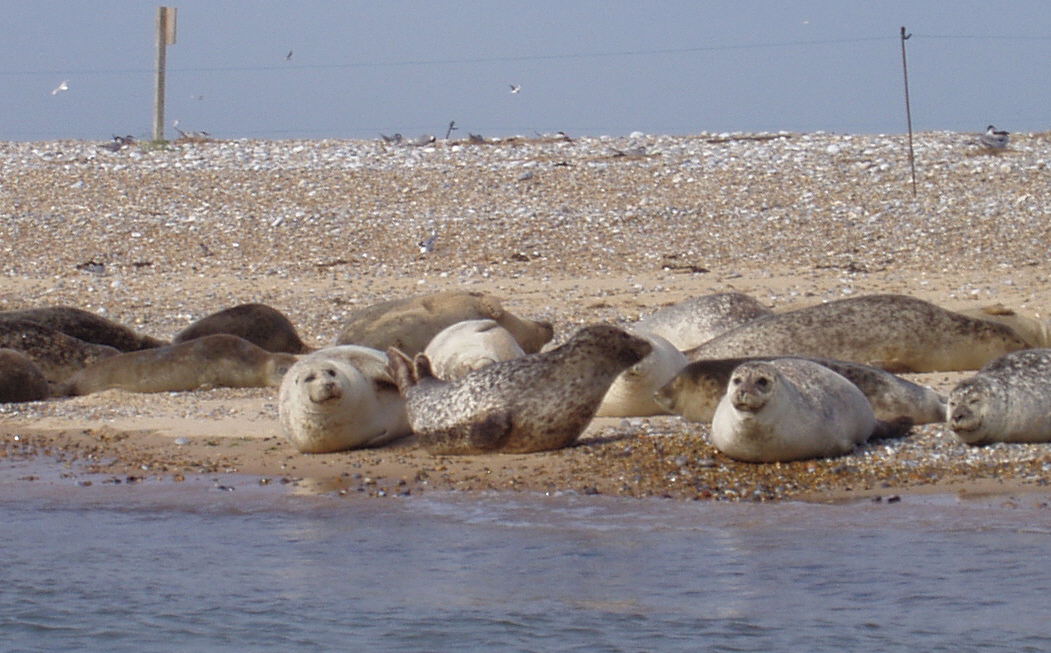
Seals at Wells next to the Sea
Blakeney
Blakeney

8.  South East England and London Walks

My husband and I used to go walking nearly every single weekend when we lived in Earlsfield, South London. Our proximity to Clapham Junction meant that we could hop on a train and be in the depths of Surrey, Kent or Sussex in no time. We worked our way through the Time Out Book of Country Walks, which took in parts of the South Downs Way (13), and the Devil's Punchbowl (76). Occasionally we headed north to check out routes in Buckinghamshire like the Ridgeway (46) and the woods around Great Missenden (75), but the countryside was never as interesting as it was south of the city. For me, Buckinghamshire was too like the boring rolling farmers' fields of rape seed in Hertfordshire that surrounded my hometown. But perhaps I do it an injustice.

Our London walking bible
We also did parts of the Thames Path (63), though technically so does anyone who walks along the river in London, and the Regents' Canal Walk (number 90) through Little Venice and London Zoo.

Hampton Court
Tower Bridge

London Zoo aviary
Little Venice
Little Venice
For some reason, the Capital Ring, our very favourite London walk of all, and the only long-distance route I have ever walked in its entirety, did not get a mention, although a stretch of it did feature - through the deer haunt and London's lungs of ancient Richmond Park (98).


I think walking kept us sane in London: after long days of commuting and offices and fumes from pollution, we craved fresh air and a taste of country life. And it was the love of walking that fuelled our desire to move away and live somewhere surrounded by beautiful landscape. And Yorkshire certainly has that in spades. We are also both so lucky to have family in the Lake District, meaning we can visit those glorious fells whenever we like. It is no wonder that the top 10 featured so many walks in Cumbria. And we can't get our daughter to go on a single bloody one of them.

So where do you like to roam? What is your favourite walk, either on or off the list?

Wednesday, 24 January 2018

Girlfriends

This is painting by numbers for menopausal ladies - 1: Hot flushes, 2: Senior Moments, 3: Grey hair,  4: Wrinkles,  5: Divorce, 6: Grandchildren, 7: Wayward Children, 8: Musing on What Might Have Been, leading to 9: Trying to Recapture A Misspent Youth and 10: Feeling Old, possibly leading to 11: Being Told You Are Too Old by the New Bright Young Thing On The Block. Just splash on the concealer liberally then forget to rub it in.

Disclaimer: most of this was written after the first two episodes, so it's now kind of out of date. Arse. Been busy.

There has been obvious dumbing down for the anticipated ITV audience. "This is what sexism means." "This is what ageism means." "This is what being gay means." "This is how gay people have children... Yes, they CAN do that." "Here is a view of York Minster just in case you didn't hear the word York. Because yes, we are in York." Poor Kay Mellor - I would love to see what she originally wrote, because I know she can do things (like Love, Lies And Records) slightly more subtly than this.

Minster view
But despite all the cliches making my eyes roll, it does have a brilliant cast, who make light work (albeit with slightly randomised northern accents) of a plodding, inconsistent and stating-the-obvious script that is really trying to fit an awful lot in to a one-hour slot. Miranda Richardson plays Sue, Zoe Wanamaker is Gail, and Phyllis Logan is Linda. And that homeless bloke from Rev. plays Micky, who gets killed off in the opening moments, leaving questions unanswered other than "How desperate for a stage career must you be to take a job in the  P&O Ferries cabaret?" I know this was technically meant to be a swanky cruise ship, but I don't think they sail from Hull. Anyway, over his cabin balcony Micky goes - the perils of the North Sea. But did he jump, did he fall or was he pushed? The family, the insurance company and the police all need to know, as Micky seems to have left a trail of debt and a mystery woman behind him. His rapid drunken demise struck me as rather a waste of another fine actor, which makes me wonder if he shall return to haunt the leading ladies. (Ah, yes - just watched episode three...)

On the real North Sea you only get a porthole in your cabin, never a balcony


Trust me, it's the only way to get through the kids Disney cabaret...

The other burning question is how do they manage to get from Leeds to York and back again so quickly? Sue is the only one who seems to have a decent car, and she crashes that outside the sexual health clinic on Monkgate quite early on, before parking it illegally at the bottom of Stonegate. Unless it's by committing further traffic offences, how are they so immune to the daily jams that block the A64? (Them and the taxi drivers Sue uses after she finally gets her car towed.)

And it's not just the driving that has poor continuity - so do the characters. And you can spot this even if you don't live in York. Sue's seemingly supportive, content and carefree son suddenly turns on her at her birthday party to unleash a load of repressed issues that he blames entirely on her. Sue's total shit of a boss and part-time lover John tells her she is a waste of space and needs to move out of her penthouse (in response to which she throws a jug of mojitos over him in the Cosy Club on Fossgate), but he is then surprised to find her packing her bags in the flat the following morning. And she, oddly, seems pleased to see him, albeit briefly. Until the estate agent turns up.

Sue is features editor for the bridal magazine John owns, until he sacks her (or rather offers her a euphemistic "consultancy role") because she wrote an article about second marriages, which he claims doesn't build on the hopeful dream of marriage that the youth of today still have. They only want to think about first time around, not the possibility of second.

Yet all around Sue are middle-aged women looking for love. Herself included, though she seems to have finally dumped John, who doesn't want to know their son. Gail hankers after her ex, a driving instructor who (bit of a running theme here) hates her son. Micky's mystery lady was clearly after something. (Ah - episode three: turns out she's just bonkers and kills cats for fun.) Sue's mum is getting married to her long-term partner. However, Sue's stance against ageism doesn't extend to her own mother when she hears this. "Gross", Sue snips dismissively.

Sue should set up her own bridal magazine for the ladies of a certain age that she has become - it sounds like a good money spinner. (Episode four, maybe?) After all, tastes change within the same dream. Strapless skinny bridal gowns just don't sit right on someone over 40. Plus you have different priorities as you age. For example, I am now much more interested in articles about switching child trust funds to Junior ISAs in Woman and Home than ones guaranteeing orgasms in Cosmopolitan.

Sue's magazine just needs a honeymoon travel section with articles about Thailand so that Gail's son can mug up a bit more the next time he comes out of prison pretending to have been running a timeshare business "somewhere in the middle bit". That's if he gets let out again, having overshot his curfew by having sex with Linda's daughter. (Oh, there he is on the sofa in episode three - that was a quick spell inside.)

I am not sure how things will pan out. Who is telling the truth, Linda or mystery dress agency woman? (Ah, it's Linda - episode three.) Will lollipop lady Gail help the love of her life to cross the road, or will she go back to the ex before the decree nisi becomes absolute? Will Sue be allowed to babysit for the house of gay couples or is there just too much gin around for her to be trusted? Will Andrew get his anti-ageism day in court with "doesn't want to know" dad John? Will the ladies reform the band that protested at Greenham and performed at Linda and Micky's wedding? Will Gail's mother make another run for Scarborough in her nightie? Will Linda ever understand financial matters? Will Linda and Sue perform Morecambe and Wise sketches in bed? Will Gail get rid of her grandson's nits? (Oh, he got kidnapped in episode three.)

My husband works very near to the Trinity Centre in Leeds, and we've often been there for lunch with our daughter, sadly to overpriced but reliably child friendly chains rather than the pop-up street food that put the shopping mall on the map. Trinity also has several familiar clothes stores, an Everyman cinema, a Lego shop that we do our best to avoid and a glass roof that turns the whole place into a furnace in summer. The three girlfriends are spotted walking through Trinity on their way between the spa that serves the green sludge and the rooftop bar that serves the birthday cocktails, though where that actually is I have no idea.


Trinity, Leeds (Photo: David O'Brien)
I have been with my "girlfriends" a couple of times to the Cosy Club on Fossgate, where Sue makes the "scene" with the mojitos. We got free prosecco on one visit because they were slow to bring out our mains. We'd been so busy nattering that we hadn't even noticed how long our food was taking - but the waiter turned up with a bottle to apologise before we did. My kind of guy.

Thursday, 11 January 2018

Strictly Come Dancing


Can you believe that we were Strictly novices in our house? Apart from the "my dad nearly being on TV with Len Goodman and Ann Widdecombe" incident, we'd never really encountered it. In our life B.C. (before child) we probably (though not necessarily) had more exciting things to do on a Saturday night than watch telly. In our P.C. (post child) life, during which we watch far too much telly, Strictly always clashed with child bedtime - bath, stories, cuddles, faffing, not going to sleep - so we could never sit down and give it a go.

But suddenly here we were as a family all willingly watching a TV series together for the first time. It wasn't Netflix or CBBC just being on and annoying in the background while our daughter played with her toys and we slightly more surreptitiously played on our phones. We were all focused and keen and - after a while - obsessed. It started when our daughter heard about Aston and Janette's Trolls dance from a friend at school and asked to watch it on iPlayer. Johnnie Peacock had already piqued Mummy and Daddy's interest in Strictly during an interview on The Last Leg. Then our daughter completely fell in love with him, and we just had to carry on watching. I couldn't be prouder of her first crush, which at one point I was worried would end up being Chase from Paw Patrol. If she brings home nice young men like Johnnie (or nice young women like Oti) in her future years, then all will be happy in our household. Just not so keen on the Alsatians.

I think our daughter's motivation was partly that it meant she could stay up late and postpone her bedtime faffing on both Saturday and Sunday nights. But how joyful it is watching people learning to dance. And how unexpectedly good some people turn out to be. Like Joe, who eventually won. And Davood. Susan Calman quickstepping with Kevin to Bring Me Sunshine was a personal highlight. Obviously the best dancers were the ones who had already had plenty of training and experience like Alexandra and Debbie, but I can see why they are the ones who struggle to get the votes at times - it's a very British thing to support the underdog.

Now we realise just how much we have missed over the years - all of Bruce Forsyth's, Len Goodman's, Ed Balls', John Sergeant's, Judy Murray's and yes, even Ann Widdecombe's appearances.


The timing of our new family obsession was perfect, as our daughter then got the part of a judge in her school play, Lights Camel Action!, which was a sort of Strictly: The Nativity. She played the Innkeeper's Wife, with lines like: "Never mind a bucket of frogs - it was fun, fresh and funky!" and "I loved the bells and watching all you young men leaping around!" Miraculously she learned them all perfectly. The teachers made her watch extra Strictly in class so she could channel her inner Darcey Bussell a little more effectively.

Though with essence of Craig at times...
Of course Caesar had all the best lines, darlings. The aforementioned bucket of frogs on the camel funk: "Legs, humps and hooves all flying around with no sense of timing." On the tango: "That had all the passion of a wet fish in a paper bag." But he did love the "extension in the arms" in the Angels' Ballet, and as for the Disco Star: "Give me big hair and some glitter and I'm away... "

It was a fun show and the teachers made their own Strictly dance video to show to parents at the end. So nice to see them still with smiles on their faces after the most interminable of terms.

Our daughter cried when Johnnie had to go home, insisting that Debbie should have been made to hop on one leg in the dance-off to make it more equal. She kind of had a point, but Johnnie was happy that the judges had made no allowances for his disability. Craig didn't like Johnnie's bum sticking out, and that was that.

Wednesday, 10 January 2018

The Miniaturist

Rijksmuseum, Amsterdam

The Miniaturist is a slightly odd book. My overriding memory is lots of people wandering around crying "sell the sugar!". But there's also hypocritical Puritanism, gay and extra-marital sex, spooky prophecy, childbirth, drowning, racial tolerance and intolerance, and a woman wandering around Amsterdam with a surprising amount of freedom and feistiness considering the repressive age in which she is living. (I have no issue with women being free or feisty; I'm just questioning the historical accuracy of the book's representation of a wife's lot in the Dutch 1680s.)

But I did enjoy the television adaptation. It looked stunning, with the darkness of a Rembrandt gathering but the brightly coloured dresses of a Vermeer portrait. The performances were beguiling and the plot utterly absorbing, right from the opening moments. The programme began not with the sinister and tragic church funeral of the book, but with the beautiful Nella sailing past windmills on the way to her new marital home on Amsterdam's Herengracht, full of hope and expectation.

Zaanse Schans

Of course it all then goes horribly wrong. Nella's merchant husband Johannes Brandt is often physically absent and unwilling to engage in any form of passion when he is around. His sister Marin rules the roost with pious coldness. Nella's companion parakeet escapes. Nella then discovers that her husband only has sexual feelings for men, one of whom turns up to murder the family dog. The Brandts' African servant Otto stabs him in self-defence. The owners of the sugar that the Brandts are supposed to be selling, the Meermans, spot Johannes and the dog murderer in a tryst at the docks and report him to the authorities. The dog murderer claims he was attacked by Johannes and that his stab wound proves it. Nella then discovers that Marin is pregnant, and not emotionless at all. Far from it, in fact. Nella believes that the father is Frans Meerman, who had been romantically involved with Marin in her youth. But the father's identity is only revealed once the baby is born with dark skin. Sadly, Marin does not survive the birth's complications. Johannes is sentenced to death by drowning by the court. Otto witnesses this vile punishment and returns to the Brandt house to meet his new daughter and to grieve. 

And all of this is somehow foreseen by the Miniaturist. Johannes gives Nella a cabinet replica of their house as a wedding present, and she seeks someone to furnish it. From Smit's List, the Amsterdam equivalent of the Yellow Pages at the time, she locates a woman who lives at the "Sign of the Sun". Nella requests that she make items like a lute and a box of marzipan, but instead the Miniaturist delivers a child's cradle, calligraphed cryptic messages on folded scraps of paper, and accurate doll figures of everyone in and involved with the family. And there's more - the figure of the family dog acquires a drop of blood shortly before he is murdered. A tiny sugar cone grows mould just as some of the ones in the warehouse are discovered to be rotting in the damp.

Nella and the Miniaturist did meet briefly on screen at the end, which they don't as far as I recall in the book. This was an attempt to solve some of the mysteries of the text, but we still didn't get all the answers we seek. Just how does the Miniaturist of the title know so much about the families she makes things for? How does she predict the future? Where did she come from, and where does she go? 

And what will become of Nella, Otto and Cornelia and baby Thea after the deaths of Johannes and Marin? How can they make a success of the family firm with such scandal behind them? Will they ever sell that sugar?  

One of the mouldy sugar cones made it to the Castle Museum in York
The Dutch scenes were filmed in Leiden, rather than Amsterdam, which makes sense, since Amsterdam is far too busy to be a practical shoot location. You are not really going to get that authentic 17th century feel with hoards of Japanese tourists sailing past in glass Lovers canal cruiseboats and all those distracting shop windows in the seedier parts of town, which bring a whole new meaning to "sign of the Sun". The gabled houses are lower in Leiden, but it's such a wonderful city. We spent a couple of holidays camping in nearby Rijnsburg, and loved popping over to stroll along Leiden's waterways, take a boat trip, explore the not insignificant museums, visit the windmills and botanical gardens, or just shop at the Saturday market for cheese, stroopwafel and kibbeling before lunching at one of the many floating cafes along the canals.

Lower gables than Amsterdam


Lovely Leiden


We went back to Amsterdam this summer, while staying with a friend and former colleague of mine in Beverwijk, which is how I finally got to see Nella Oortman's dolls' house in the place that inspired Jessie Burton to write the story. It was the rainiest day imaginable (thankfully the only one in an otherwise glorious week), and the Rijksmuseum was the fourth we had visited that day because it was impossible to do anything outside. We bought annual museum passes which saved us hours of queuing in the deluge. Our return to science centre Nemo had gone down well:


But the Van Gogh Museum and the Stedelijk less so with our six-year-old philistine. Moan, moan, moan.

Officially "the worst museum in the world"
Mondrian art appreciation

So the Rijksmuseum was seriously pushing our luck, even with a promise of pancakes at the end of it. Which possibly explains why our daughter was prepared to give us a maximum of 20 minutes to see the whole museum. And why the snaps of the dolls houses are very blurry - blink and we would have missed them as we hurtled past.


We also managed to catch glimpses of The Night Watch and the Milkmaid, which have now merged in my mind into images of the Brandt house from this superlative televisual feast. Thankfully the girl was safely in bed during the broadcast so I could watch it with all the time in the world. Nice work, BBC.

Sunday, 7 January 2018

A House Through Time


Have you ever wondered about all the people who lived in your house before you? Who they were, what they did, how long they were there? You may of course already know the answers - you may live in a relatively new house that's only had one set of previous owners (like the house I spent most of my childhood in), or in a house that has been in the same family for generations (like my dad's house in the Lake District, which was first lived in by my great, great grandfather). But generally, it's information a lot of us don't have.

Ours for generations

If you've bought your house, you will normally have met the previous owners to you, though not necessarily. The owner may already have moved out or be an absentee landlord, or the house may be a probate sale owing to its occupant's demise. There may be neighbours around to fill in some of the gaps in information, depending on the friendliness of your street. But however much or little you know about your house's previous occupants, everyone who has lived there before you will have left their mark somehow - their choice of bathroom or kitchen, a scrap of wallpaper several layers below yours, a wall built or knocked down, a forgotten box in the loft, a bush in the garden. Their ghosts live on, though not necessarily in a supernatural sense. For unless you completely gut the place, it will never feel entirely yours.

A House Through Time, written and presented by social historian David Olusoga, aims to chart the history of a single house, 62 Falkner Street in Liverpool, from its first occupants to the present day. He has gleaned information from archived documents and newspapers. It's an approach a bit like the one used in Who Do You Think You Are?, only without the celebrity starting point. Our starting point is instead a picture of fields, owned by the farmer after whom the street is subsequently named (though with a misspelling). The house was built in 1840, and was originally number 58, its number increasing to 62 as more houses were built piecemeal onto the road. Nowadays, it's a strikingly substantial Georgian-style (because technically it's Victorian) terraced property in what looks like a highly desirable part of town. It may have since lost a lot of its original features and fireplaces, but back in the day it had a drawing room, a maid, bespoke furniture, the works. The house was bought for around £1,000 by its first owner, Richard Glenton - a seemingly lazy and unambitious clerk in the Liverpool docks, which were then at their height. Glenton had lodgers to help him pay the bills on his meagre £50 annual income - the rest of his apparently lavish lifestyle being funded by the "bank of Dad"; a dad who had also got him his clerk's post in an extraordinary level of nepotism apparently quite normal for the time. Once Dad died, leaving his fortune to Richard's unmarried sister, Richard had to sell up and find himself a more humble abode. He sold the house to a couple called the Orrs, who had been in service but ended up the equivalent of millionaires in today's money. The husband, a former butler, worked long hours as the manager of the "newsroom" at an exclusive gentleman's club, overhearing conversations which enabled him to make shrewd financial investments.

Then the house was owned by Wilfred Steele, a cotton trader who experienced every extreme imaginable in his short life. Boom, bust, battle. He lost two young sons and ended up in a debtor's gaol, yet abandoned two stepdaughters to a miserable fate in a Liverpool workhouse. He benefited from slavery but fought in the American war against it, though the latter was probably for the money rather than the morality of the issue. David Olusoga quite understandably did not take kindly to this man, although many of the facts were speculative rather than pure.

I am very much looking forward to the next instalment. And the programme makes me want to find out more about our house in York. It was built around 1910, and for many of its recent years was a student rental property, before being sold to our vendors, who did a lot of crazy renovations, the majority of which we have had neither the luck, skill nor money to undo. We met said previous owners once - they were both academics, and like us, had moved to York from Crouch End in London, which seemed like a good omen. They spent the three months between us viewing the property and completing the sale chain-smoking and cooking greasy dinners, the aromas resulting from which it took us about ten months to eradicate. We never quite got rid of the dirt.


Edinburgh nights with Walter Scott
Our house has a name, Waverley, etched into the glass above the front door. But I have no idea when this was done or why. None of the other houses on the terrace have a name, though they all have the same Victorian tiled hallway floor. Was it Waverley after the Walter Scott novel, the steamship on the Clyde, or the great station at Edinburgh? I do know that the house was already called Waverley 50 years ago, since by chance last summer I met another previous owner. She happened to walk past when I was sitting on our new bench outside in the front yard and stopped to chat. She had bought the house with her husband but when they had two young children found it as impractical as we had with our young toddler, with its steep stairs, narrow rooms and deep draughts. They, unlike us, had got their act together and traded it in for a 1930s semi with a garden a few streets away. Their legacy was to remove a picture etched onto the glass behind the word Waverley, to knock the kitchen through into the toilet outhouse to create a downstairs bathroom, and to board out a storage area under the eaves to install a train set, where we now keep our suitcases and cat carrier.

The place I sit to learn about our house

Another previous resident turned up mildly stoned on our doorstep one night to say he liked what we had done to the front yard, since it was just a hole in the ground when he lived there. I am not even sure if he had the right house or why he had felt so compelled to knock on the door, though the story of the giant hole makes me wonder if there are more to the suspiciously diagonal cracks in our walls than my husband will ever believe.

And then there is the story of a certain school administrator who I discovered had a boyfriend who still lived with his parents in our house many years ago. "Ooh, the fun I've had in your lounge!" she merrily told me. Our lounge was his bedroom, as the family rented out the top of the house to lodgers working on the railway. I've never quite felt the same about the four walls surrounding our sofa since.

Tuesday, 5 December 2017

Howards End

Hidcote, Cotswolds

I thought, "Do I need to watch this? Because I've seen the film." But it turns out that the film is now 25 years old and the plot I remembered was actually the one for The Remains of the Day (there is a small cast overlap). But I suppose that is at least one step better than remembering it as Howards Way. In fact, it's pretty remarkable - I can't remember the plot of a film I see nowadays for longer than five minutes. I saw The Girl On The Train at the weekend, for example. It was about a girl on a train. She drank a lot. She got confused. And so did I.

So yes, it turned out I did need to watch Howards End, and I am glad that I did. But a shock similar to the realisation of how long ago the film was made was seeing Matthew McFadyean eligible to play the part of "stuffy old man", when I still like to think of him as "bright young thing". It's a bit like if Ewan McGregor was asked to play Grandpa Joe in Charlie and the Chocolate Factory. That hasn't actually happened yet (has it? Renton was still only a mildly craggy middle-aged man in T2, even if he did have a heart attack at the start (don't ask me the rest of the plot - it's been weeks)), but elsewhere Phillip Schofield is a white-haired man fronting This Morning without Gordon the Gopher, and Paul Nicholas and Wayne Sleep are presenting documentaries about retiring. It seems we've all moved on, people. Alas. I've aged, and so have they. (Shopping list item one - reading glasses.)

Another shock was how little of the plot takes place in Howards End itself. Mr Wilcox struggled with his property portfolio, inadvertently buying an estate in the wrong part of Shropshire, where there were "no grouse to shoot". He didn't seem sure what to do with any of his dwellings or which of them to live in, because there were just so many of them. He couldn't keep track and just let them all slowly decay. A bit like the landlords of the properties either side of us here in York. But then the point of this adaptation did rather seem to be its relevance to now - the class divides of wealth, opportunity and sexual attitudes; the gulf of achievements and expectations between genders; the rich decimating the lives of the poor with no heed of the consequences, like water running off a duck's back; the difficulty of climbing back on the ladder when society dictates that you slide off it; wandering about on top of a cliff edge looking longingly across to Europe.

The BBC had thrown in some racism for good measure (and Lord knows, there's still plenty of that around today) with servants and partners from ethnic minorities being regarded with a frown beyond the disapproval of all things German that the Schlegel family faced. But I loved the unconventionality of the Schlegels - the assertive sisters with their cosmopolitan tastes, wonderful dress sense and free opinions (which they were able to express, even if Mr Wilcox wasn't listening), and Tibby with his hypochondria, apprentice pipe smoking and eccentric academic foibles such as suddenly sitting down to learn Chinese. I am not sure if he set foot outside during the whole series.

It was all very subtle, with long scenes and gentle putdowns dismissing great ambitions. So subtle that I didn't even notice that the first Mrs Wilcox was terminally ill, or that Leonard and Helen were supposed to have had sex. The big dramatic climax - the reveal of the illegimate pregnancy, the beating with a sword, the bookcase end of poor Mr Bast - was over in a moment. Then we were back to a slow meadow, reminiscent of that wonderful scene between Lucy and George in A Room With A View where they kiss for the first time in the Tuscan hills (another, even older film). Only this time the love was between two sisters and a child, and for a man who finally understood what it is to honour a legacy, a dying wish, and who had accepted that you cannot act differently to the rules that you dictate to others. There was thunder rumbling in the distance.


There were many scenes in London. The Wilcox's London apartment was in a block on Kensington Gore opposite the Royal Albert Hall, through a window of which I once saw pornographic material being projected onto a giant screen during an interval at the Proms. I thought the soon-to-be-demolished Georgian terraces of Wickham Place were on that perpetual weekend film set of Lincolns Inn near Holborn but apparently they were in a square in trendy Clerkenwell.

Photo: Becky Buckley

This Howards End, with its gorgeous country garden reminiscent of the one in the opening photograph of this post, was a house near Godalming in Surrey. West Wycombe House in Buckinghamshire stood in for Oniton in Shropshire, but I can't comment on the National Trust's permissions for grouse-shooting. Aunt Juley's house and the cliffs looking out to Europe were above Studland Bay in Dorset. They all made England look far lovelier than the realities of 2017, where sadly the "remains of the day" are just too many of the attitudes in Howards End.

Dorset cliffs

Friday, 1 December 2017

Love, Lies and Records


I am enjoying this Leeds-based drama by Kay Mellor, although I haven't quite worked out whether it is comedy, drama, murder mystery, love story or just a mix of everything. That would make sense, as  "a mix of everything" is pretty much the job description of a council registrar, who must see the highs and lows of life on a daily basis.

Ashley Jensen plays Kate, a slightly unconventional senior registrar who is popular at work but has teenagers at home, with all the upheaval that brings. Dodgy texts from unknown males, truancy from school, late-night disappearances, stepsons randomly turning up to move in. Her husband is a  detective, dragging corpses of young women out of canals. Somehow it looks as though all of these things are connected by more than just family ties.

Rebecca Front plays Judy, the woman who longs to be Kate's boss but instead finds that Kate has become her boss. This brings out all of Judy's narcissistic nasty sides, with her (pardon the pun) trump card being her possession of CCTV footage of Kate's fling with a colleague at the office Christmas party. Judy doesn't seem to accept that the reason no one wants her to be the boss is that she's really a bit of a bitch. I'm not saying that it's a good idea to shag your colleagues in a stationery cupboard either, especially if you have a husband and kids, but being nice to your workmates (even the ones you aren't shagging) usually takes you far.

Then there is James, trying to become Jamie. He's been thrown out by his wife, so he moves in to Kate's as well, even if the sofa is the only space left in the house.

The office, Judy aside, is an open and tolerant place where people from all walks of life walk in. From the parents who want to call their child Chlamydia, to the gay couples finally allowed to marry after 25 years of partnership, to the Slovenian woman possibly being illegally coerced into marriage to get her husband a right to remain. Then there is the man who turns up with his newborn baby son to register his birth. The baby's mother is absent because she is dying in a hospice, having refused to start potentially life-saving cancer treatment in order to be able to continue with her pregnancy. The couple aren't married because they never had the money or time to get around to it, and now it seems it's too late. But not if Kate has anything to do with it. A couple of phonecalls, some emergency form-signing and a trip to a charity shop later, the hospice is full of flowers and family and - well, you're a heartless cow if it didn't bring a tear to your eye. Very shortly afterwards, the husband is back at the Town Hall to register his wife's death. Kate is out officiating at a wedding and trying to locate her truanting daughter, but he waits and waits, his calm and peaceful baby son lying in his arms. For it is Kate that he wants to officiate. Not Judy.

The lions of Leeds
My cousin Flo got married at Leeds Town Hall. It was an early start for us all, as the only slot available for the date she wanted was at 9 o'clock in the morning. Which may explain my slightly dishevelled look on the photo below. I was very glad I didn't have to do full bridal make-up and hair by that time, but of course Flo managed all of that effortlessly and looked amazing. And actually, it was a good thing that the wedding was so early - about an hour after we had our photos taken on the Town Hall steps it began raining torrentially and didn't stop for the rest of the day. 


Though I am fairly sure that the steps that they use in Love, Lies and Records are actually the ones that go up to the City Museum in Millennium Square, where my daughter and I have whiled away many an hour in its Toddler Town and animal-filled basement. 

And nasty Judy may run this TV Leeds Council office, but Nice Judy runs Leeds City Council in real life. I am biased of course - she happens to be my aunt. But she just got awarded a CBE by the Queen at Buckingham Palace in a ceremony alongside Mo Farah and Delia Smith, for her services to local government and the City of Leeds. So she is definitely doing something right. We are so proud of her. Bravo.