Tuesday, 24 January 2017

Where To Invade Next?

Our minor rebellion against Trump's inauguration on Friday was to pick up a DVD we've had out on rental for a while and finally watch it: Michael Moore's Where To Invade Next?


I think that most of the vilified "liberal elite" (for how terrible a thing it is in today's world to be intelligent, well-read and considerate!) probably wish that Michael Moore had been the larger-than-life figure on the podium in Washington becoming the 45th President of the United States instead of the belligerent orange Wotsit we can only hope doesn't kill us all over the next four (or - please no! - eight) years.


The film was made under the Obama administration, when if it weren't for the Republicans blocking every move he made, the country might still have stood a chance. Michael Moore went round (invading) various countries (mostly European) seeking out their best bits to steal, peacefully and politely, to implement back home. For the greater good.

Things like French school dinners, which look fit to serve in a gourmet restaurant. Or Italian paid annual leave, which runs at seven weeks, with an extra 15 days to cover your honeymoon if you get married, and an extra month's pay in December to help fund Christmas. Or the Finnish education system, which doesn't believe in homework and still gets some of the best results in the world. Or Slovenian universities, which don't charge tuition fees (remember when British ones were like that?). Or the notion of work-life balance in Germany, where your doctor can prescribe you a trip to a spa to relieve everyday stress. Or the Norwegian penal system, where prisons are open and the inmates trusted with knives in the kitchen as they work. Or the Icelandic police, who prosecuted and jailed the bankers who had bankrupted the nation in the 2008 global financial crisis, instead of bailing them out. Or the Portuguese police, who don't arrest people for drug offences any more and have seen drug use fall as a result. Or Tunisian women's rights to health care, family planning and parliamentary representation which, you know, exist.

Note that he didn't bother with us. He took nothing from Britain.

America, Moore concluded, had much to learn. Although some of the ideas (appropriate punishment, prosecuting fraudsters) were actually American in origin. They've just lost their way somewhere along the line. No more so than now.

And it made me despair that the British government is now rejecting Europe and all of its brilliant ideas in order to suck up to the lies, mysogyny, extreme right-wing policies and racism of the Trump administration. All because he dangled a little carrot on a stick (yes, little, yes, orange, from the man whose name means fart) and Theresa May is desperate for some sort of trade deal after she makes us turn our backs on the great European Single Market in pursuit of her Daily Mail Brexit. It's disgusting. It's embarassing. It's frightening. How can any of this be happening in 2017?

And given that some countries in Europe have different (and better) laws and rights to Britain, it rather flattens the Leave campaign's argument that Brussels was dictating everything we did and that we needed to "take back control".

So where would my family most like to escape to, once Brexit trashes our lives completely and Trump annexes what's left of the UK as another American state, compounding it with the rising hate crime on our streets, no environmental regulation of what little manufacturing is still functional, and no free health care for anybody?

Well, Finland looked pretty good, with its belief that children should be allowed to just play rather than being trained to perform in standardised tests and nothing more. With our daughter due to sit SATS next year, that has big appeal. She's at a good school which does its utmost to make learning still fun within the draconian confines of Gove's 1950s National Curriculum, but it breaks my heart that she will only get the one childhood, one chance at schooling, and it has to be under this sodding Tory government. Who only care about neat handwriting (when nobody handwrites anything in the real world any more), fractions and archaic grammar rules. (Don't get me wrong, as a linguist I love grammar, but not taught like this.)

We do our best to make sure our daughter does lots of art and play and sport outside of school - things that even Mrs Thatcher let us do in our infant school in the 1970s - but why not go somewhere that just encourages it from the get-go?

Posh hotel: the SAS Radisson Royal

Finland was the first place my husband and I went on holiday together, in 2001. It was also the first place we stayed in a properly posh hotel, as top-end business accommodation in Helsinki sells for half price in July and August, when all the Finns retreat to their summer houses. We had a fun few days exploring the capital and its waterfronts and gardens, and all of its architectural styles - the yellow and white palaces reminiscent of St Petersburg, its orthodox and unorthodox cathedrals, its modern art galleries and colourful art nouveau quarters, the fortress on the island of Suomenlinna and Saarinen's unusual granite railway station. We then caught the catamaran from the South Harbour over to beautiful Tallinn in Estonia for the second half of the week.

Cathedrals...

Orthodox...

...and Unorthodox.

Railway station

Like St Petersburg

Art nouveau

Modern art gallery

Suomenlinna

Kaivopuisto Park


But I am not sure living so far north, with all that dark in winter and all that light in summer, wouldn't send me just a teensy bit mad.

So where else? Well, those school dinners in France were something else... Scallops, followed by lamb and couscous, followed by creme caramel. They even have a cheese course. How lovely to see kids tucking into a hunk of Camembert with not the red wax husk of a BabyBel or a Cheestring wrapper in sight. It's been much commented on that when they eat out, French kids just eat normal food, unlike their British counterparts, whom restaurants here expect to feed a rotation of fishfingers, beefburgers, chips and pasta in tomato sauce ad infinitum. Although our brats' fussiness seems to be infiltrating across the Channel these days - in Annecy last year it seemed every restaurant offered a menu enfant at vastly inferior gastro quality to the dishes on the a la carte.

Lake Annecy lunch

And if Marine Le Pen wins the Presidency, France will become as much of a no-go destination as the US.

So is it time to make my husband learn German? Angela Merkel has an open-door policy for refugees, but by the time Theresa May, Boris Johnson and David Davis have finished offending her in their failed Brexit negotiations, I doubt very much that will include the British.

The hardest thing is knowing that just as we want to go and live somewhere else in Europe, we will no longer have the right to.

Tuesday, 17 January 2017

Hospital


Well, it's been a while. Brexit, Theresa May's incompetent government, Labour's utterly ineffectual Opposition to the incompetent government, and now the prospect of Donald Trump becoming US President this week have made me lose enthusiasm for pretty much everything, and this blog is one casualty. It's no longer fit for purpose. Times have changed. I don't want to watch television because I don't want to see the news. I don't want to travel anywhere because the pound is worth peanuts and I am embarrassed to be associated with a country that has become xenophobic in spades, bullied and dictated to by the right-wing press, and is now overrun with people too ignorant to spot the lies they are being drip-fed.

So I need to change tack, and write something more appropriate for the times, or something that might actually do some good. I am still mulling over ideas.

But a documentary last week about a London NHS trust, filmed at St Mary's hospital in Paddington, London, made me angry enough to seek an online outlet to rant. And this is currently the only one I have.

There is no escaping the fact that the NHS is currently in dire straits. Theresa May and Jeremy (cough)-Hunt may claim otherwise as they sing "lalala" with their fingers in their ears before cutting off more money and handing out more private contracts to Richard Branson, but the rest of us can see it's cash-starved and desperate. Nobody wants to get ill ever, but now there is little guarantee of speedy or safe treatment if we do.


They may be contemplating (or actually) leaving in droves, but right now, the NHS is still staffed by brilliant, caring doctors and nurses. But it's bloody difficult getting to see them. And this documentary showed why. Two highly experienced and skilled surgeons with two urgent patients to treat, and yet both were kept waiting for hours by managers trying to secure each an intensive care bed, none of which were available in the hospital. So the surgeons just sat around, scrubbed up and ready to go, for hours, waiting and waiting. One eventually got to operate, on a lady from Norfolk with a ruptured aorta. The other, treating a man with an oesophageal tumour, had to wait until the next day. So these surgeons were effectively paralysed, unable to attend to more routine matters, or perhaps see outpatients or catch up on paperwork, because they were on call, waiting for the go-ahead. They were frustrated and cross and tired, and had been at the hospital for hours before the operations were finally allowed to take place late in the day, all of which surely has to compromise patient safety. Seeing clinical experts sitting around DOING NOTHING, wasting all their years of training and and practice and research was beyond farcical. It was utterly maddening. All because the government won't give the hospital any more money to open up more intensive care beds.

And there were no beds anywhere else in the hospital either. People were unable to go anywhere, even if they didn't need to be in hospital any more, because there's no money to fund social care either. Managers were sitting in meetings seriously debating whether it was acceptable to turn endoscopy suites into makeshift wards, or to lie adult patients alongside children in the paediatrics unit. The lack of beds meant routine operations were being cancelled to allow for emergency life-saving operations to take place, thus causing delays further down the waiting lists for those with long-term but less urgent needs. Possibly then making them become urgent. And when serious cancer treatments and surgery get delayed, it reduces their chance of success. Everything just gets worse, people need more treatment, and the whole system grinds to a halt.

The Red Cross has likened the state of Britain's NHS to the humanitarian crisis of a warzone or a Third World country. How can this be happening? The NHS has never had everything it needs, it's never been performing as well as it could, and there undoubtedly has to be major changes to how it operates and how it is paid for, but to deliberately starve it of funds like this, ready to usher in some American style privatisation, is beyond despicable. This government just does not care. As long as rich Tory MPs can get to see their private GPs and consultants, as long as City bankers have their health insurance schemes, they will never give a shit about anyone else. Welcome to Brexit Britain, which sold itself on a lie and a false bribe about the NHS on the back of a bus.

Wednesday, 30 November 2016

Rillington Place and Back In Time To Brixton


Two programmes revealing Notting Hill's murky past. Now its plush white porticos house millionaire financiers, famous spin doctor politicians and massive basement conversions, but once, long before Hugh Grant set foot in its doors, it was such an impoverished, dingy and dismal place to live that it wasn't even remotely near the tip of the radar of "up and coming". It was wrecked, miserable, and racist.

And never more so as when Reg Christie and his wife Ethel moved down from Sheffield in the 1940s, to make a fresh start on their marriage after Reg had been AWOL for nine years, eventually turning up doing time for crimes unspecified. He claims Notting Hill is up and coming. But he's a big fat liar.

He's also a voyeur, a philanderer and a murderer. Strangely incongruous with the shuffling, mumbling, balding, bespectacled moper he appears to be. He is repressed with palpable tension, yet his morose, put-upon wife merely shrugs as she comes across yet another blood-stained mattress, or sees him digging a shallow grave next to a rosebush. It's so dark in the house thanks to the wartime black-out that it's hard to see or be sure of anything. There is an eerie atmosphere, threatening hallucination, uncertainty and death. Ethel gets cross if she finds Reg flirting with a prostitute or a lady visitor, but her anger soon collapses into terror when Reg finally lashes out, nearly strangling her over the kitchen sink. Ethel runs away to her brother's, but a niggling, pleading letter from Reg makes her return, only to find the coat of a missing woman hanging in the hall.

The story begins with a hanging too - and this man's story is still to be told. More next week.


The family in Back In Time to Brixton are later to arrive in Notting Hill, attending the carnival in 1999, the last year of their journey tracing the story of a typical Jamaican family in London arriving on the Windrush in 1948. Their first night in London is in even less desirable accommodation than Rillington Place (though at least it doesn't come with its own murderer) - an underground bunker near Clapham South tube station that had been used as an air raid shelter in the war. It's already equipped with rickety bunk beds and a bucket, which is all the authorities think people need. That and corned beef. Thankfully soon the family can move into a poky one-room bedsit, and then gradually work their way up through life and jobs in Brixton. But the struggles and attitudes the families faced in London, the xenophobia and mistrust, the outright abuse, make me wonder if Britain has learned nothing in the past sixty years. The tabloid headlines of the Sun in the sixties echo those of anti-migrant stance seen in the Mail and Express today. It's shocking, despicable and depressing.


The Irwins are as interesting and entertaining as the Robshaws last year, only a bit cooler, and definitely better dancers. The dad has even been on Gladiators. Brixton, like Notting Hill, has changed immeasurably since the arrival of the Windrush generation. At the far end of the Victoria Line, the tube station now blasts out classical music to keep the hooded teenage hoodlums away. It was a short bus ride from my house in Clapham, but I usually only ended up there to see a gig at the Academy (Belle and Sebastian, Starsailor, and James' great reformation in 2007) or a film at the Ritzy. I suppose I had my own prejudices: memories of the news footage of the riots in the 1980s, that the shops and bars were better (or at least more convenient) on my doorstep in Clapham, or that Brixton was just too busy.

And speaking of busy, 1999 was coincidentally the only year I went to the Notting Hill carnival. I had a lovely time eating jerk chicken and fried plantain at the street food stalls, listening to the steel bands, and cheering on the colourful floats and befeathered, whirling dancers. Such a fabulous, life-affirming, vibrant, energetic sight. Until I decided it was time to head home to Clapham and realised there was about a million people between me and the nearest open tube station; the entire million seemingly moving in the opposite direction to me. The crowds meant I never could face going back. But it was fun while it lasted.

Wednesday, 16 November 2016

Great Canal Journeys

Loch Eil and Loch Linnhe

Another series from the wonderful Timothy and Prunella. Floppy hats, lots of whisky and wine, and the following of dreams.

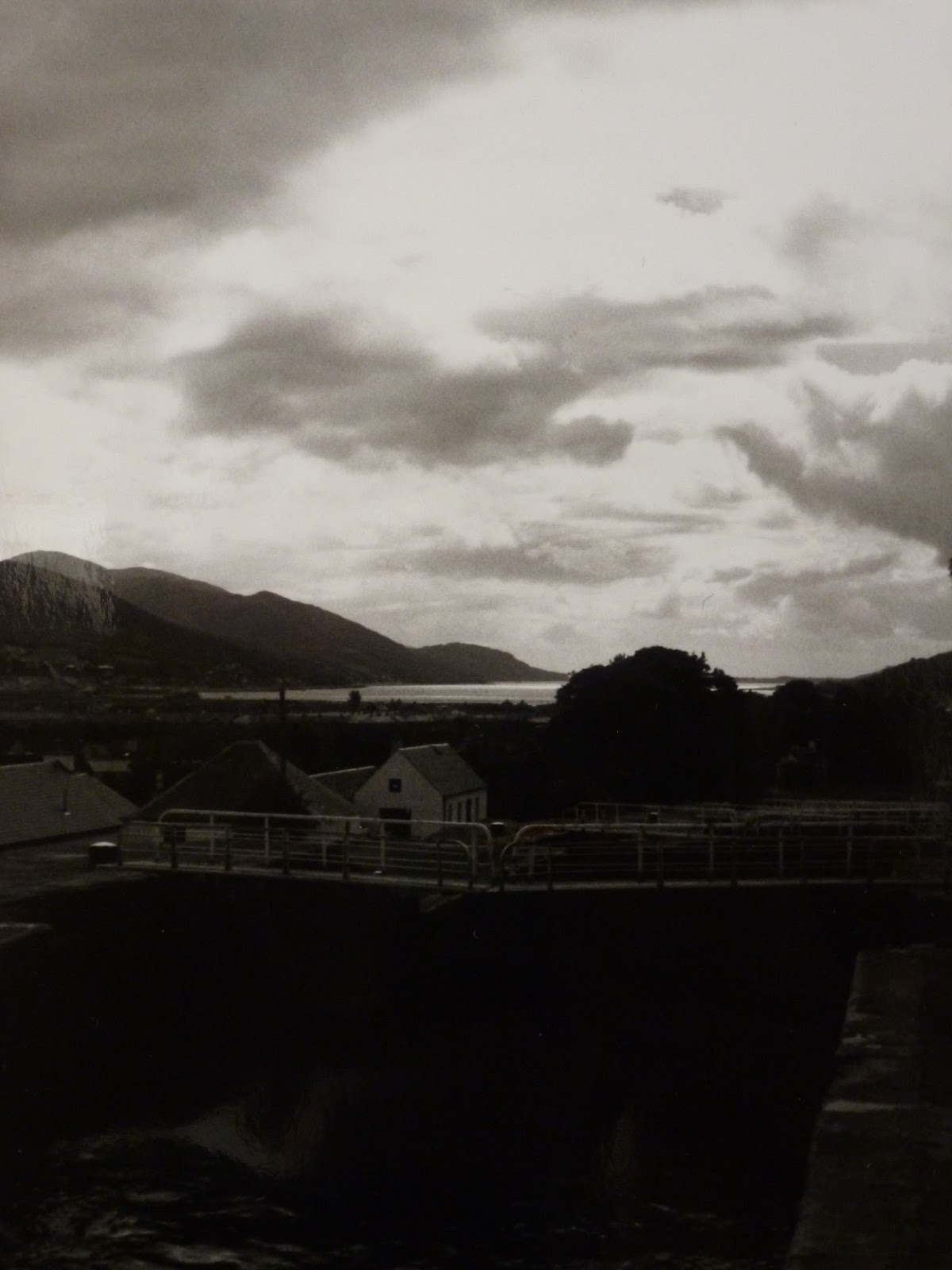
Two of the series were dedicated to crossing Scotland, with not a narrow boat in sight. The first episode travelled the length of the Caledonian Canal, seeking out Nessie along the way, and passing through the locks of Neptune's Staircase near Fort William before heading out to the open sea.
Very dark - Neptune's Staircase

Last night Tim and Pru started in Balamory, ahem, Tobermory on Mull, where I was disappointed to see that Archie's castle isn't actually pink. They then braved (but were defeated by) treacherous seas on the crossing to Iona, eventually having to resort to the heaving and tilting Caledonian McBrayne ferry instead, the only local vessel strong enough to withstand the waves. On Iona, stranded by the storm, they reflected on this important place of pilgrimage. Once the weather improved, and after bypassing a terrifying looking whirlpool, they crossed the Crinnan Canal by puffer ship to Loch Fyne. Fresh lobster on board, but not an oyster in sight.

Iona


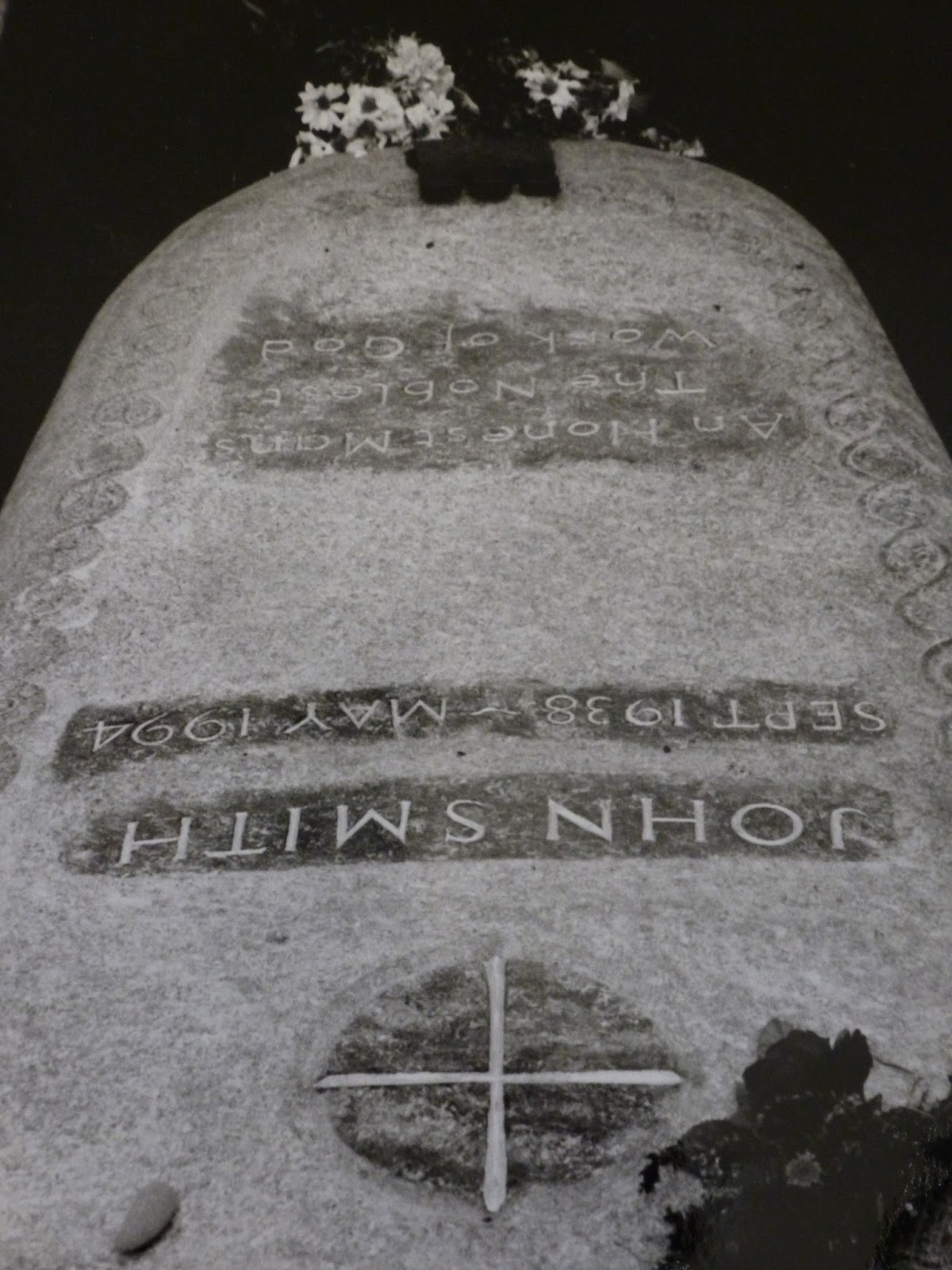
We made our own pilgrimage to Iona in 1995, to see John Smith's grave. Thankfully the ferry crossing was smooth, the journey made only mysterious by mist. If nothing else, this series always serves to remind me that life is short, memories may not last, that a loving partner should be cherished forever, and that seeking out harmless pleasures on a daily basis is possibly the secret to a happy existence.

Monday, 14 November 2016

Planet Earth 2

Planet Earth 2 - is this an alternative universe? One where there is no Brexit and Donald Trump hasn't been elected President? One where the nightmares have ended, nobody votes for anything stupid, and everyone lives in peace and harmony and actually gives a shit about humanity?

Sadly not, it's still Planet Earth number one. It's just series number two. Still our flawed, fucked up world. But on camera, it's an achingly beautiful one. One where David Attenborough is in charge, at least of the voiceover. It's not him parachuting off mountain slopes or camping out on a rocky outcrop in a quagmire of penguin shit these days. The man is 90, after all.

All it does is serve to remind us of what is at stake if pacts to reduce carbon emissions are reneged on and countries don't work together for the greater good.

It's not really cheering me up, but it is a stunning watch. From the snake chasing the newly hatched iguanas, to the solitary snow leopards nuzzling the rocks, to the flamingos getting stuck in the ice, to the dancing grizzly bears rubbing up against a tree, to the baby ibex teetering above a vertical drop, it's compelling and breathtaking viewing, all with crystal clear photography; the film slightly slowed to enable us to appreciate it even more.

Though my husband got offended when I said the sloth swimming to find a mate reminded me of him. I don't see why. It really did. And that was one very cute sloth. He captured my husband's slightly slow, lumbering gait perfectly. I'm not saying my husband is a pygmy, or that he has three toes. He doesn't like swimming that much either. I'm not sure he would have ever crossed water to come and find me. Dancing on the revolving floor on Newcastle's Tuxedo Royale moored under the Tyne Bridge does not count. But he is a cuddly, furry beast with a sweet smile.

Many of these are places far more remote than I have ever been, but there are glimpses of the familiar - mountain goats and marmots in Glacier National Park, a waterfall tumbling into the Yellowstone River, an Arabian desert, a blowhole off the New Zealand coast.


How can anyone vote to destroy all this? Because that is essentially what happened in America last week, as a climate change denier was elected to power. How selfish we are. We are as greedy as the eagles squabbling over carrion, as snarling as the snow leopards wanting a mate, as merciless as the snakes, and ultimately as vulnerable to nature as the penguins being smashed against the cliffs in a storm.

Many years ago, I subtitled a documentary about the life of David Attenborough. He was of course quite wonderful - erudite, self-deprecating and very witty. At one point, someone asked him about God. He said he is often criticised for portraying the violent side of animal behaviour in his documentaries when God allegedly made nature so glorious. His response resonated greatly with me at the time:

"Quite frequently people say how...I never give credit to the Almighty Power that created nature... It's funny that people, when they say that this is evidence of the Almighty, always quote beautiful things... orchids and hummingbirds and butterflies and roses. But I always have to think too of a little boy sitting on the banks of a river in West Africa who has a worm boring through his eyeball, turning him blind before he's five years old. I reply and say, 'Presumably the God you speak about created the worm as well.' I find that baffling, to credit a merciful God that action. Therefore it seems to me safer to show things that I know to be truthful and factual and allow people to make up their own mind about the moralities, or indeed the theology, of this thing."

Whether or not there is a god, and personally I do not believe that there is, man must not play god with what we have.

Tuesday, 8 November 2016

Dark Angel

It's a very British thing to share "a nice cup of tea" with someone. It usually puts the world to rights, even if only briefly. Unless you happen to be Alexander Litvinkenko or in any way related to Mary Ann Cotton, in which case "a nice cup of tea" is seriously bad news.

Mary Ann Cotton was Britain's first female serial killer. Dark Angel told her rather far-fetched seeming story. But hailing from County Durham, she really existed. Using a teapot full of arsenic, when not scrubbing away bed bugs, Mary Ann murdered her way through at least three husbands, one lover, her mother, best friend, and possibly several of her children, and a few of other people's too. Her husbands all had life insurance policies, which were readily paid out to our evil, hyperfertile, softspoken Mackem. (Not that she got wealthy from their deaths - she remained poor and debt-ridden.) It seems that people so commonly died of typhoid or gastric fever in those days that it took a very long time for the claims departments to get suspicious about all these painful deaths by vomiting. In fact they never did - she was eventually found out by a pharmacist. Mary Ann gets life insurance money for her dead children too, although the implication on ITV is that none of them were killed deliberately. The reality is more blurred.

If the TV series is to be believed, an awful lot of her children died before she discovered arsenic. Mary Ann's life was stuck in one long miserable cycle of pregnancy, birth and bereavement. Her first husband (and in fact every subsequent husband), as far as she was concerned, was a useless tosser. Particularly after she discovers sex with local bad boy Joe Nattrass. She moves on from town to town, job to job, husband to husband, but Nattrass remains a constant provider of pleasure and entertainment. (Until she bumps him off too.) I will never be able to look at the pier in Saltburn again. Let's not think about what might happen underneath the boardwalk, but last summer, the railings above had been brilliantly yarnbombed.


Yarnbombing, and the view towards Mary Ann's family home


The other main location shoot for Dark Angel was none other than our park at the end of our street. Filming was done over a few days in August 2015. Stupidly, I didn't take any pictures. We had our usual route to the reading cafe and play area blocked by television trucks, lighting rigs, bossy women with clipboards, and people in Victorian costume pushing prams and carrying parasols.


We love our park. Built by Joseph Rowntree as a memorial to his factory workers who fell in the First World War, the park opened in 1921. Only having a small, damp north-facing yard, we use it as our garden. And we don't have to mow its lawns, prune its trees or weed its flower beds. Although given government austerity, that time may yet come. It might be ankle deep in goose poo and flood regularly, but on a regular day, the park a haven of green and tranquility. (The goose poo was all too apparent on Dark Angel.) It has fun climbing frames and a zip wire, play sculptures, a woodland walk, a library cafe, model boating and wildlife ponds, waterfowl, islands of coot nests and abandoned goose eggs, a mosaic maze, bowling greens, weeping willows, tennis courts and rose pergolas. It hosts regular events like cycling festivals, sponsored walks, forest schools, and an annual birthday party where the queues for facepainting stretch for miles. The other day, a thousand KitKats were strung from the aforementioned pergolas. It's the sort of magical thing that happens there. Rowntree Park has many people who care for it, and one resident park keeper, who sails around in a dinghy when the flood waters rise. It opens late in summer, but closes far too early in winter. Last winter, after storms Desmond and Eva, the park was full of water for several weeks, and badly damaged. It's made a miraculous recovery, thanks to a lot of hard work by the city council and local residents.

Chocolate bombing

The same pergolas in flood

As well as Rowntree Park and lovely Saltburn On Sea, filming for Dark Angel also took place at Holy Trinity Church on Goodramgate, the Beamish Museum and a house on a familiar looking street that I can't quite identify but it must be round here. Cotton was hanged in the old prison yard of the Castle Museum in York . The teapot ended up in the River Ouse just opposite our house.

Dark Angel was silly, sexed up, contrived, tended to state the bleedin' obvious ("Keep back, lass, arsenic is POISONOUS!"), but nonetheless an entertaining yarn for a wintry Monday night.

Friday, 21 October 2016

A World Without Down's Syndrome and The Doctor Who Gave Up Drugs

These were two recent thought-provoking documentaries that led to me reflecting on how the state of the NHS makes us behave.

Children with Down's Syndrome are amazing. They bring just as much joy to the world as any other child. But if you knew you were pregnant with a child with Down's Syndrome, would you continue with the pregnancy? This was the question Sally Phillips was asking us. A new screening programme is to be introduced that can diagnose Down's with 99% accuracy without any invasive tests, and she fears that it will result in a 100% abortion rate for pregnancies that test positive, as happened in Iceland when the same screening programme was rolled out there. Phillips' eldest son has Down's Syndrome. He is gorgeous, bubbly, funny, wonderful. He has a right to life that she thinks shouldn't have the chance of being taken away.


What became clear during the documentary is the lack of support for parents facing a Down's Syndrome diagnosis. Many are advised by doctors to abort because of the health risks associated with the syndrome (heart problems and the like), and not shown enough of the positives. Children with Down's Syndrome lead full, active lives and cope extremely well in mainstream schools. The decision about whether or not to terminate has to be made quickly as time is not on your side. Termination is a procedure which frankly sounds horrendous, nobody could take lightly, and must affect mothers for the rest of their lives. But who is it that is unable to face supporting a potential lifetime of health problems, the parents, the doctors, or the NHS? The NHS is at breaking point - is it cheaper to make a woman abort than to have to provide the services to care for her child? Is this governing the pressure being placed on parents by doctors? I hope not, but there has to be a proper, informed choice, which there doesn't seem to be at the moment. What people also don't take into consideration is that babies without Down's Syndrome aren't necessarily going to be any easier than babies with Down's Syndrome. A baby could be "perfect" in medical terms, but still not let you sleep for the first four years of its life.

Sally Phillips didn't have to make a decision about her pregnancy as her son wasn't diagnosed until after he was born, and her antenatal screen had not put her at risk of having a child with Down's Syndrome. Phillips clearly has the resources to cope with whatever life throws at her, emotionally and financially. Not everyone would be able to manage as well as her. But what would she have done had she known in advance?

I don't know what decision I would have made. Having spent ten weeks feeling sick and exhausted and grumpy before my nuchal fold scan, I had vested a lot of physical effort already into the pregnancy, and would not have wanted all that effort to be in vain. But then I might have felt unable to cope with any kind of disability when faced with it as a reality. Before the scan, I was in a slight state of disbelief. I hadn't managed to convince myself that I was having any sort of baby at all. I was aware I might miscarry, so hadn't let my hopes rise too high. And yet as soon as I saw that tiny little blob on the screen, complete with tiny fingers and feet, somersaulting over my bladder, to me she was perfect. I loved her, I wanted her. I couldn't have stood having to get rid of her. But I was told that all was well. I didn't have to even consider that. I know that I cried with relief.

Phillips put her heart and soul into the documentary, but obviously was presenting it from a strong personal standpoint. I don't think women who feel unable to go through with a Down's Syndrome pregnancy should be judged in any way, because it's a heartbreaking decision, and an indescribably painful loss. What Phillips succeeded in doing, I hope, is opening up a debate on the issue so that parents will get to understand the true nature of both alternatives if they get a Down's Syndrome diagnosis.

.

The NHS is also at breaking point when trying to treat people with long-term health issues. It ends up pumping them full of drugs, because it's the quickest, easiest and sometimes cheapest thing to do. There isn't time or money to do all the tests available. Surgical alternatives are higher risk and expensive. And it's what we've grown to expect. We're all prone to visiting our GP (assuming we can get an appointment) expecting a perfunctory check during our ten-minute slot, not many questions asked, and a prescription that will cure us to be handed over at the end.

Some drugs will cure us. But others are prescribed unnecessarily - antibiotics for a virus being the classic example. Because we've spent decades guzzling these pills like Smarties, bacteria are learning to outsmart us and are becoming drug resistant. In time, they will kill us all. Anyone who believes that man is the most advanced being on the planet needs to think again.

Other drugs are prescribed continuously where alternative therapies could prevent the need for long-term pills. The Doctor Who Gave Up Drugs (Chris van Tulleken) tried to see if there was another way. He found that a daily walk could reduce cholesterol or Type 2 diabetes symptoms in some patients. The highs from open-water swimming alleviated depression in another. He also highlighted the ineffectiveness of painkillers and the more beneficial aid of physiotherapy and properly structured exercise.

Personally, I hate taking pills. I have to take thyroxine every day, and it makes me feel like crap. All drugs in my experience come with a raft of side-effects. Doctors tell me off for spending too much time reading the leaflet in the box. But I don't want to take something only to then have to deal with something else. Right now, in perimenopause, I have developed a whole host of symptoms, largely attributed to hormone imbalances, and not helped by having an auto-immune thyroid disease. I'm trying to learn to manage continuous acid reflux and menstrual problems, but the quick-fix drug solutions - PPIs, the Mirena coil - have only caused other issues. Who will look at the whole me? No GP has the time to really work out what is going on and they need to fob me off. And I don't want to waste their time either. I'm pretty miserable right now. What could The Doctor Who Gave Up Drugs do for me?