Wolf Hall is one of only two books I have ever given up on. (The other is Ulysses, where I barely managed the first page.) I don't give up on texts easily - I recently got all the way through AS Byatt's Possession, chosen by someone for my book group, even if - admittedly - I may not have read all (=any) of the poetry. I have ploughed through dozens of papers on Phonological Theory (although I was being paid for some of them). I have even read every word of Peter Ackroyd's tedious tome on London, which is months of my life I will never get back and makes me cringe every time I hear the word "noisome". (No one else uses the word "noisome", thankfully.)
But Wolf Hall got the better of me. It probably didn't help that I was pregnant when I started it. My contract for my job at the university had finished just before my 20 week scan, meaning I had a whole summer to myself before our daughter was born. And the bigger my belly grew, the more time I spent reading. So I thought it was the perfect time to pick up Wolf Hall. I was wrong. After a fairly gripping and pacey first chapter describing kicking a little boy's head in, everything ground to a halt. I quickly realised that I only had weeks left to myself before life would change forever. And I did not want these weeks to be wasted on Hilary Mantel when there were still so many other books in the world left to read.
I'm not the biggest fan of historical fiction, and my knowledge of the period in question is limited to "divorced, beheaded, died." So I would agree that I didn't have the best background for the book. But what I really couldn't deal with was Mantel's use of the pronoun "He" (capitalised) to refer to Thomas Cromwell. If she had just called Cromwell Cromwell or Thomas or Tom or Mr C or even "the lawyer", she and I could have gotten along. Elsewhere, "He" (capitalised) usually means God. Sometimes in this book He also did mean God. And then there were lots of other lower case "hes", like Henry VIII and Thomas More and Wolsey that became upper case "He" if they started a sentence. And sometimes "he" (lower case) actually meant Cromwell. It was all very confusing if your head is full of hormones, and reading every sentence ten times simply to work out the referents drained my desire to care two hoots about the plot.
So Wolf Hall went to the charity shop and when Bring Up The Bodies was published and also won the Booker I simply shrugged and thought a) "not on your nelly" and b) "I don't believe any of the judges have read it."
Apparently, there's a third volume in the pipeline, but the BBC have got ahead of themselves and already made the first two into telly. Which could prove a problem if the third has some drastic plot twist that turns the first two volumes on their head. Although I doubt it will. No one will read it anyway. But it will still win a Booker prize.
I watched Wolf Hall, just to see if in the absence of pronouns I would start to care about the plot at all. It turns out not much. You couldn't fault the performances, other than Cromwell's daughters visibly twitching on the bed after they had supposedly died from "sweating sickness", and Anne Boleyn's band playing completely out of the synch with the background music. Mark Gatiss was possibly a bit too like someone out of The Spanish Inquisition on Monty Python. And Damian Lewis made Henry VIII too attractive, although he is still young and only on his first wife at this point. (Being stuck on his first wife is kind of the point.) But I am just splitting (red) hairs here.
I have always admired Mark Rylance, and I don't think he could have been bettered in the lead part of "He". Only ever paying a fiver for a groundling ticket, I went to see him play many roles at the Globe Theatre in London, the most memorable of which was Olivia in an all-male Twelfth Night. Rylance has an extraordinary range of facial expressions, and his firm but gentle presence always makes the subtle magnificent.
Where is Wolf Hall? Not in the book, it seems. Probably because it's something to do with Henry VIII's wife number three, Jane Seymour, and he isn't even married to number two yet. So it's not really a problem that I haven't been there for the purposes of this blog, because you probably haven't either. York Place has since been swallowed up by Whitehall and ravaged by fire. But this is Telly And Travels, and if you have read this far, you must need a picture by now. So here are some very old photos of Hampton Court, which is now run by the lovely Dr Lucy Worsley, who must never be confused with Cardinal Wolsey, speech impediment or no. Hampton Court has an indoor tennis court, a very long vine and a lovely riverside setting, and to be honest, I can't remember much else about it other than its exorbitant entrance fee.
Cardinal Wolsey is banished to Esher, although he hates it, and I have been there too. A friend used to live in a little cottage near the station with two giant cats and a rowing machine, although we won't talk about who owned the rowing machine. Esher is next to Sandown Park racecourse, where my husband and I spent a fun day once. Although being surrounded by people on City bonuses who can afford to chuck away £100 on a single bet when you are on a paltry subtitling salary is quite an eye-opener. "Er, put one on for me at two pounds each way please. And since you're downing your third bottle of champagne, could I possibly nab your free beer token?"
But I think I will give up on the Wolf Hall television adaptation too. If only because I am feeling the lure of my Christmas present from my brother:
I may be some time.
Writing about television programmes that make me remember somewhere I have been. The links may be tenuous, the travel with or without child.
Showing posts with label Breaking Bad. Show all posts
Thursday, 22 January 2015
Friday, 10 October 2014
On Meth Cooking and Madison Avenue
With only The Great British Bake-Off and Our Zoo catching my attention of late, I have been busying myself with a couple of box sets which had finally been shipped out to us by Lovefilm after a few years of waiting: the first season of Breaking Bad and the third of Mad Men.
Breaking Bad was as wonderful as everyone claims - it had us gripped from the first moment, a crazy, nude-apart-from-a-respirator campervan chase across the New Mexico desert. Brilliant scientist Walter White, who has begrudgingly ended up a dull Chemistry teacher in an indifferent high school, is diagnosed with terminal lung cancer, despite never having smoked a cigarette in his life. Somehow he has to afford the medical treatment his family (a pregnant wife and partially disabled son) insist he try, even though it is likely to fail. And he needs to be able to leave them a financial legacy for when it does. Walter is too proud to accept a hand-out from a wealthy friend and one-time academic associate (who seems to have made his money from one of Walter's brainwaves anyway). So Walter begins cooking meth, therewith entering a seedy criminal underworld for which he has not even a smidgeon of the wherewithal required to succeed. And yet... Time after time, his scientific knowledge saves the day. His meth is the best on the market. His weaponry is an arsenal of chemical explosions and lethal gas clouds. He knows how to dissolve a body in acid, even if his dippy high-school dropout assistant doesn't listen to his instructions. Walter's moral code is painfully considered and unconventional. He proves you can be a good guy in the guise of a bad guy. And he can get away with stuff simply because to the world (and his Drug Enforcement Officer brother-in-law) he is still that dull Chemistry teacher. You can't help but love him, and I sincerely hope it's not another few years before we get sent Season Two.
I have never been to New Mexico, and (funnily enough) I have never cooked meth. I was the one cowering at the back of Chemistry lessons, too scared to even light my own Bunsen burner. Caravans are where we spend cheap family holidays, and they are usually reserved for huddling under blankets, reading Julia Donaldson, and playing endless games of Shopping List. The only thing ever cooking is a pan of pasta on the gas stove.
I have however watched a parent die of cancer, and the whole backdrop to Breaking Bad makes me so thankful that my mother's treatment - thousands and thousands of pounds' worth of ultimately unsuccessful hormone-blocking medication and chemo and radiotherapy - was entirely funded by our National Health Service, leaving our family savings intact.
We watched the second season of Mad Men while on holiday in Nice, as some evenings were wet and cold enough to make use of our apartment's DVD player. Our visit to the French Riviera was very much the sort of holiday that pre-dated our daughter's arrival - lingering over long lunches washed down with Provencal rose, exploring galleries of Matisse, Miro and Chagall, lying still on a beach for hours, and buying pungent cheese from local markets. It seems like a lifetime ago.
And thanks to the five years that had lapsed between seeing Seasons Two and Three, I was a little hazy as to what had been going on. But it wasn't long before the various takeover transactions, sexual obsessions and murky behaviour came back to me, and the third season was - as ever - a delightful watch. At first, not much seemed to happen other than the usual vast amounts of smoking and drinking in offices and kitchens, and me wishing I looked as good in a dress as Christina Hendricks. There was a new British contingent in the office, but otherwise, same old, same old, and nothing wrong with that. But suddenly several slow-burning plotlines unfolded to a significant finale, when long-suffering Betty Draper finally showed her philandering and mysterious husband Don the door, and the ad men of Madison Avenue had to steal their way out of soon-to-be sold down the river Sterling Cooper to set up the new, hopefully upriver Sterling Cooper Draper Pryce, operating out of a hotel suite. The tipping point for these events was the Kennedy assassination. Everyone remembers where they were when they heard that news. Unless, like me, you weren't born yet. My generation remember where they were when they found out Diana died instead.
But it's not really about the plot on Mad Men. It's the comments on society that fascinate me. The treatment of women, both at work and home: no divorce rights, the expectation that you stop work as soon as you get married, let alone have your first child, and the assumption that if you are appointed to a position that is something other than secretarial, you will fill it for less pay and have most of your suggestions ignored. The treatment of men during childbirth, banished to the hospital waiting room. The treatment of women during childbirth, for that matter: sent comatose by medication while flat on their backs, with their doctor armed with forceps. The racism, covert and overt: you have a African American maid, and while she may be paid and you tut a little when horrific events unfurl in Alabama, it's quite possible that it's "just not the right time" for the Civil Rights Movement. The attitudes towards disability: a leading light in the company gets his foot severed in a stupid workplace accident and is instantly written off as never being able to work again, whereas now he would sue the company's ass off and they would at the very least be obliged to make the office wheelchair accessible. The closet, frustrated nature of homosexuality. The lack of connection between smoking and lung cancer, or risks during pregnancy. Lucky Strike is Sterling Cooper's biggest client, whereas nowadays you wouldn't even be allowed to advertise tobacco products.
So today, yes, in Britain, women may succeed in advertising (though not necessarily at equal pay to their male counterparts), and there is no sitting around all day drinking on sofas - or at least not on the office sofas. And all smoking will be done outside on the street. But there is so much competition between clients and colleagues that the stress levels are probably enormous. I had a housemate in London who had a job in advertising, and she loathed it so much that she would vomit every single morning before she set off to work, unable to deal with the pressure to create copy to ridiculous deadlines and keep up with her zany, quirky contemporaries, who were all baying for her job.
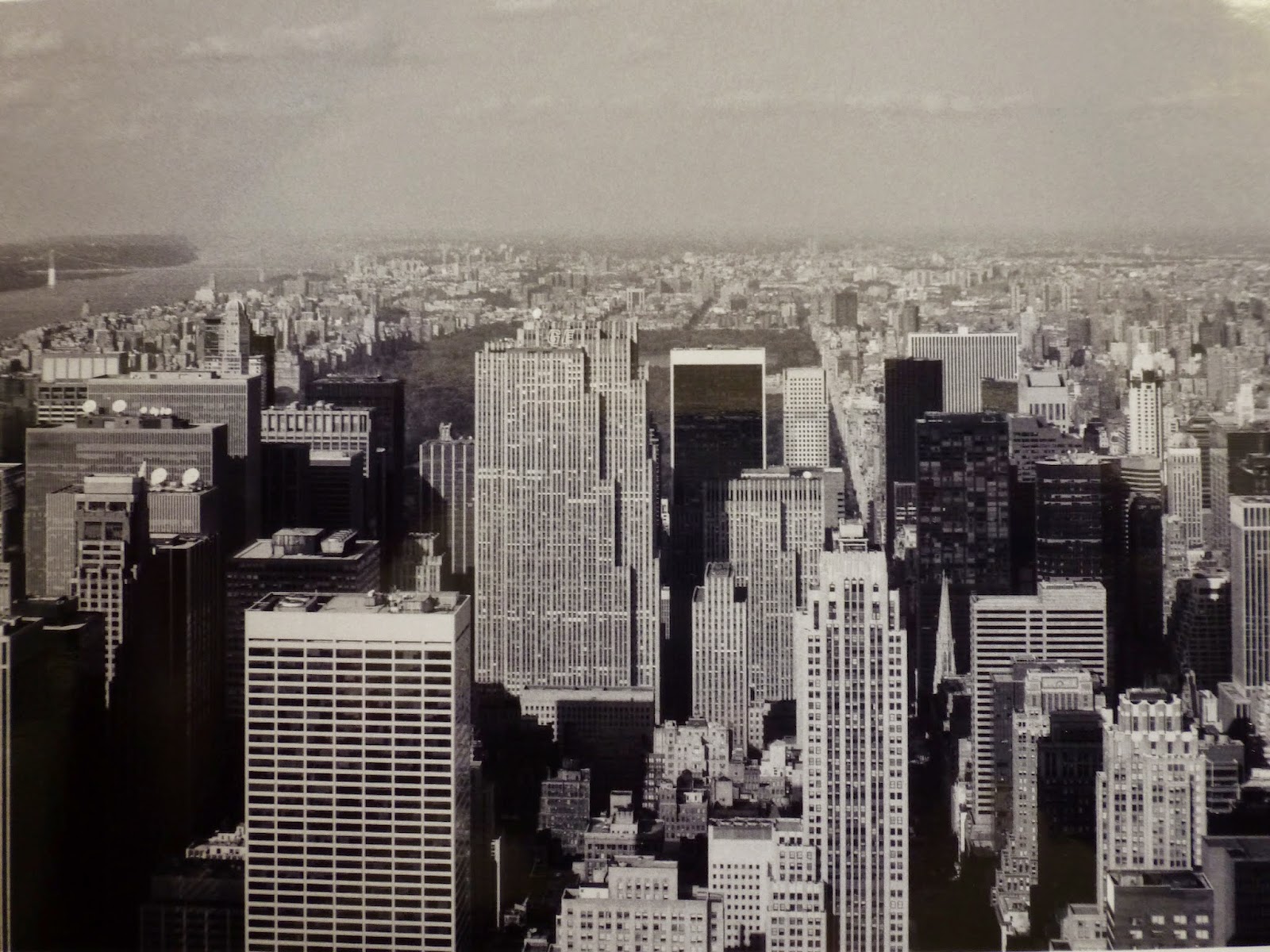
Did I walk down Madison Avenue in New York in the autumn of 2002, my only ever visit to the city, another trip that feels a lifetime away? Well, I must have done, because the Whitney Museum of American Art is situated on a corner of it, and we spent a whole afternoon there. The Whitney exhibits art that would have been utterly contemporary at the time of Mad Men, Andy Warhol in particular. Plus a vast collection of Jackson Pollock and Edward Hopper paintings, all housed in a giant concrete cube. A wonderful place. But there was no sign of Don, Roger, Pete, Peggy or Joan on the street outside. Nowadays, the advertising agencies synonymous with Madison Avenue have largely moved out, just like the newspapers on Fleet Street in London. As Bob Dylan would sing only a month after the close of Mad Men's Season Three: the times, they are a-changin'.
Breaking Bad was as wonderful as everyone claims - it had us gripped from the first moment, a crazy, nude-apart-from-a-respirator campervan chase across the New Mexico desert. Brilliant scientist Walter White, who has begrudgingly ended up a dull Chemistry teacher in an indifferent high school, is diagnosed with terminal lung cancer, despite never having smoked a cigarette in his life. Somehow he has to afford the medical treatment his family (a pregnant wife and partially disabled son) insist he try, even though it is likely to fail. And he needs to be able to leave them a financial legacy for when it does. Walter is too proud to accept a hand-out from a wealthy friend and one-time academic associate (who seems to have made his money from one of Walter's brainwaves anyway). So Walter begins cooking meth, therewith entering a seedy criminal underworld for which he has not even a smidgeon of the wherewithal required to succeed. And yet... Time after time, his scientific knowledge saves the day. His meth is the best on the market. His weaponry is an arsenal of chemical explosions and lethal gas clouds. He knows how to dissolve a body in acid, even if his dippy high-school dropout assistant doesn't listen to his instructions. Walter's moral code is painfully considered and unconventional. He proves you can be a good guy in the guise of a bad guy. And he can get away with stuff simply because to the world (and his Drug Enforcement Officer brother-in-law) he is still that dull Chemistry teacher. You can't help but love him, and I sincerely hope it's not another few years before we get sent Season Two.
I have never been to New Mexico, and (funnily enough) I have never cooked meth. I was the one cowering at the back of Chemistry lessons, too scared to even light my own Bunsen burner. Caravans are where we spend cheap family holidays, and they are usually reserved for huddling under blankets, reading Julia Donaldson, and playing endless games of Shopping List. The only thing ever cooking is a pan of pasta on the gas stove.
| A caravan in a very drug free (unless Calpol counts) corner of Holland |
***********
We watched the second season of Mad Men while on holiday in Nice, as some evenings were wet and cold enough to make use of our apartment's DVD player. Our visit to the French Riviera was very much the sort of holiday that pre-dated our daughter's arrival - lingering over long lunches washed down with Provencal rose, exploring galleries of Matisse, Miro and Chagall, lying still on a beach for hours, and buying pungent cheese from local markets. It seems like a lifetime ago.
And thanks to the five years that had lapsed between seeing Seasons Two and Three, I was a little hazy as to what had been going on. But it wasn't long before the various takeover transactions, sexual obsessions and murky behaviour came back to me, and the third season was - as ever - a delightful watch. At first, not much seemed to happen other than the usual vast amounts of smoking and drinking in offices and kitchens, and me wishing I looked as good in a dress as Christina Hendricks. There was a new British contingent in the office, but otherwise, same old, same old, and nothing wrong with that. But suddenly several slow-burning plotlines unfolded to a significant finale, when long-suffering Betty Draper finally showed her philandering and mysterious husband Don the door, and the ad men of Madison Avenue had to steal their way out of soon-to-be sold down the river Sterling Cooper to set up the new, hopefully upriver Sterling Cooper Draper Pryce, operating out of a hotel suite. The tipping point for these events was the Kennedy assassination. Everyone remembers where they were when they heard that news. Unless, like me, you weren't born yet. My generation remember where they were when they found out Diana died instead.
But it's not really about the plot on Mad Men. It's the comments on society that fascinate me. The treatment of women, both at work and home: no divorce rights, the expectation that you stop work as soon as you get married, let alone have your first child, and the assumption that if you are appointed to a position that is something other than secretarial, you will fill it for less pay and have most of your suggestions ignored. The treatment of men during childbirth, banished to the hospital waiting room. The treatment of women during childbirth, for that matter: sent comatose by medication while flat on their backs, with their doctor armed with forceps. The racism, covert and overt: you have a African American maid, and while she may be paid and you tut a little when horrific events unfurl in Alabama, it's quite possible that it's "just not the right time" for the Civil Rights Movement. The attitudes towards disability: a leading light in the company gets his foot severed in a stupid workplace accident and is instantly written off as never being able to work again, whereas now he would sue the company's ass off and they would at the very least be obliged to make the office wheelchair accessible. The closet, frustrated nature of homosexuality. The lack of connection between smoking and lung cancer, or risks during pregnancy. Lucky Strike is Sterling Cooper's biggest client, whereas nowadays you wouldn't even be allowed to advertise tobacco products.
So today, yes, in Britain, women may succeed in advertising (though not necessarily at equal pay to their male counterparts), and there is no sitting around all day drinking on sofas - or at least not on the office sofas. And all smoking will be done outside on the street. But there is so much competition between clients and colleagues that the stress levels are probably enormous. I had a housemate in London who had a job in advertising, and she loathed it so much that she would vomit every single morning before she set off to work, unable to deal with the pressure to create copy to ridiculous deadlines and keep up with her zany, quirky contemporaries, who were all baying for her job.
Did I walk down Madison Avenue in New York in the autumn of 2002, my only ever visit to the city, another trip that feels a lifetime away? Well, I must have done, because the Whitney Museum of American Art is situated on a corner of it, and we spent a whole afternoon there. The Whitney exhibits art that would have been utterly contemporary at the time of Mad Men, Andy Warhol in particular. Plus a vast collection of Jackson Pollock and Edward Hopper paintings, all housed in a giant concrete cube. A wonderful place. But there was no sign of Don, Roger, Pete, Peggy or Joan on the street outside. Nowadays, the advertising agencies synonymous with Madison Avenue have largely moved out, just like the newspapers on Fleet Street in London. As Bob Dylan would sing only a month after the close of Mad Men's Season Three: the times, they are a-changin'.
Subscribe to:
Posts (Atom)