Showing posts with label Scotland. Show all posts

Wednesday, 16 November 2016

Great Canal Journeys

Loch Eil and Loch Linnhe

Another series from the wonderful Timothy and Prunella. Floppy hats, lots of whisky and wine, and the following of dreams.

Two of the series were dedicated to crossing Scotland, with not a narrow boat in sight. The first episode travelled the length of the Caledonian Canal, seeking out Nessie along the way, and passing through the locks of Neptune's Staircase near Fort William before heading out to the open sea.
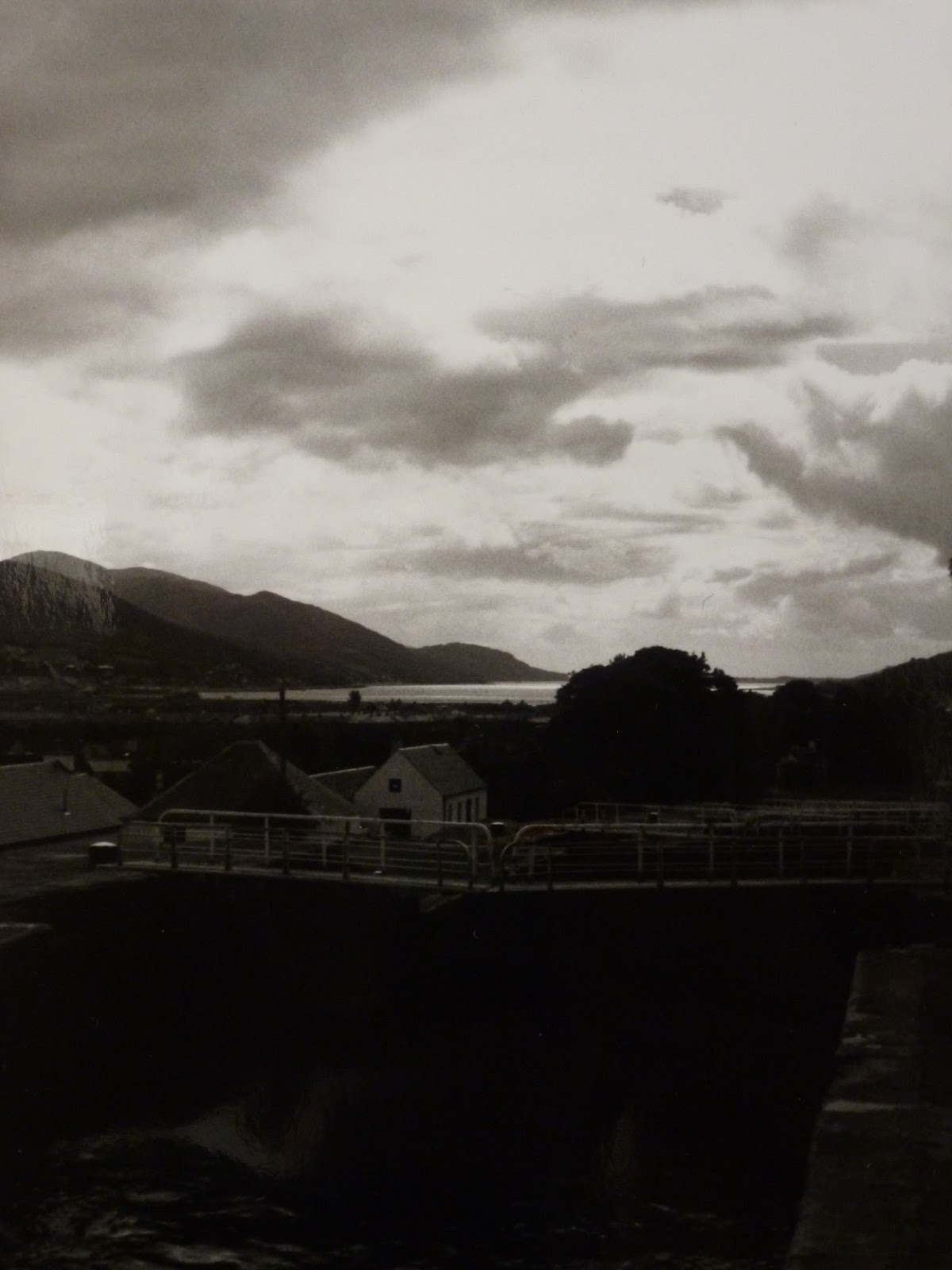
Very dark - Neptune's Staircase

Last night Tim and Pru started in Balamory, ahem, Tobermory on Mull, where I was disappointed to see that Archie's castle isn't actually pink. They then braved (but were defeated by) treacherous seas on the crossing to Iona, eventually having to resort to the heaving and tilting Caledonian McBrayne ferry instead, the only local vessel strong enough to withstand the waves. On Iona, stranded by the storm, they reflected on this important place of pilgrimage. Once the weather improved, and after bypassing a terrifying looking whirlpool, they crossed the Crinnan Canal by puffer ship to Loch Fyne. Fresh lobster on board, but not an oyster in sight.

Iona


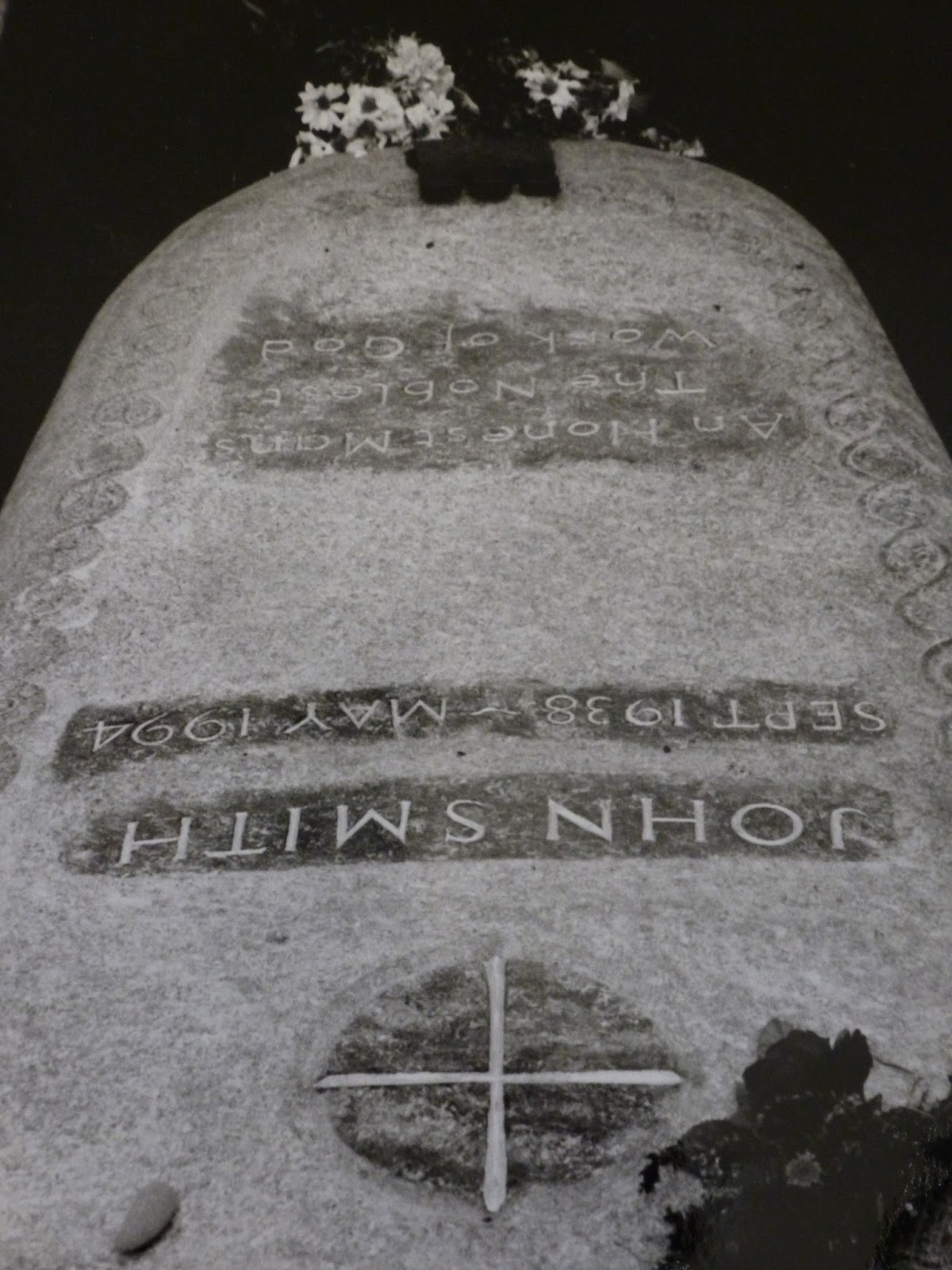
We made our own pilgrimage to Iona in 1995, to see John Smith's grave. Thankfully the ferry crossing was smooth, the journey made only mysterious by mist. If nothing else, this series always serves to remind me that life is short, memories may not last, that a loving partner should be cherished forever, and that seeking out harmless pleasures on a daily basis is possibly the secret to a happy existence.

Wednesday, 18 May 2016

Paul Merton's Secret Stations

I don't know why I have this pull towards programmes about trains. My railway obsessed brother would argue that it's genetic.

But this isn't Michael Portillo's Grand Tour style Continental journeys, staying in sumptuous imperialistic hotels, riding high-speed express trains wearing ridiculous fluorescent jackets. Instead here is Paul Merton in a flat cap and tweeds, visiting youth hostels and stations in such remote corners of the country that you have to stick your thumb out to stop the train. Once aboard you have to tell the guard where you plan to get off, otherwise the train will trundle straight through. For these are station request stops. There are apparently 152 of them in the UK.

Merton travels from Devon to Wales to Cumbria and Scotland on amusingly named lines (Looe Valley, Kyle) to amusingly named places (Luxulyan, Pontarddulais, Drigg, St Keyne Wishing Well Halt). A lot of the trains are no bigger than buses, but the last is the night sleeper to Fort William from London Euston, which deposits Merton in the middle of a vast isolated moor on the Scottish estate of Corrour.

Merton visits nuclear waste facilities, supermarket depots, espionage schools, wedding dress shops and china clay mines. He cheats at a spot of fell running. He walks through doors that lead nowhere. He overpays for a churn of Devon Ambrosia cream. He joins a male voice choir. He visits a station (Reddish South) which has only one train a week, running in only one direction. The service keeps going because it would be more expensive to petition Parliament to abolish it, but it has three loyal passengers, and three loyal trainspotters who wait to see them get off at Denton and get the bus home.

Paul Merton is always Paul Merton - jovial, witty, surreal, prepared to wear a funny outfit and point out the ridiculousness of life without being rude. It was a peaceful, enjoyable watch for a Sunday night, even if I was watching it about 30 years before my time.

Arisaig

West Highland Line going over the Glenfinnan Viaduct

We once spent a week in Scotland overlooking the West Highland Line to Mallaig. We stopped briefly at Arisaig, where Paul Merton tells us that the Special Operations Executive trained spies in the Second World War. I've also spent a beautiful week in Pembrokeshire, where Merton learns to operated a signalbox and meets the man (Dixe Wills) whose book Tiny Stations inspired the series. I've visited Devon and Cornwall many times. I've also spent a day exploring the bleak West Cumbrian coast, dominated by Sellafield and nuclear risk.

Aberfelin, Pembrokeshire

But I don't think I have ever had the pleasure of visiting a request stop station. Something to save for my retirement perhaps, assuming any of them are still open by then. Reddish South possibly.

Sunday, 13 March 2016

Dunblane: Our Story


I wasn't there. I have never been to Dunblane and my links to the town are tenuous - my husband has cousins who once lived there. And they didn't live there then. So really I have no right to write about Dunblane. But this documentary on BBC2 on Wednesday night was so restrained and calm and yet so unbearably moving that I instantly felt compelled to put pen to paper. The dignity of the survivors was overwhelming. There was no anger or bitterness, but there was a profound, never-ending sadness. There were lost dreams and shattered lives. Baby sisters grew up never knowing their older sibling. Widowed partners lost their only child. A daughter lost a mother; a mother who died trying to protect pupils in her care. A headmaster walked into a stinking, smoke-choked room of massacred children. The world was just too cruel that day.

But somehow the survivors did survive, a small triumph of love and hope over the evil that came to the town of Dunblane on March 13th 1996. We all know about the world-famous tennis player that had a miraculous near miss. These were some of the others, who had until now been silent. Some were lucky, some desperately unlucky, but all of them were changed forever. It's a credit to the school headmaster that he was able to carry on after what he had witnessed, and bring the school and the community together. He helped the townspeople fend off the fierce media spotlight by acting as their spokesman, so that normal life, somehow, could resume. The school was back open after nine days. The children needed somewhere to go, and something to focus on. It was the right decision.

But the school has a new gym now. There are some places you cannot return.

I wasn't there, but Dunblane is one of those events that you always remember where you were when you heard about it. I was in my second year at university, and came into our kitchen to find my housemate Mark in tears. He was watching the one o'clock news on our crappy black and white television, which perched on the microwave with a coathanger for an aerial and only intermittent signal. But the news itself was clear: we were bearing witness to the aftermath of one of the worst mass murders ever to happen on British soil. (What I didn't realise until I saw this documentary is that the world was told what had happened before some of the children's parents, who were kept waiting in a house next to the school.)

It was utterly unfathomable. 20 years on, it's still hard to take in. Now I have a five year old daughter, exactly the same age as the children who were killed that day. So it hits home even harder to contemplate what happened. That a man, a local oddball youth leader known to police, could drive into the grounds of my daughter's school unnoticed, enter the building carrying four handguns and 700 rounds of ammunition, find the school hall and fire 105 bullets into her PE lesson, killing her, her teacher and 15 of her classmates, doesn't bear thinking about. It's too shocking and terrifying for words. And yet that is what happened in Dunblane.

We may bemoan the extreme security measures schools have in place these days. The high-perimeter fences, electronic gates and buzzer systems, the grilling from the office staff as they hand over the signing in and out books, the CCTV, the obsession with safeguarding in Ofsted reports. But we should only be thankful, if it means that no Thomas Hamilton can ever be allowed to wander off the street into a school again.

No school could possibly have expected something quite so horrendous to happen, especially not in a small community like Dunblane, where everybody knew each other. But security had definitely taken a back seat until then. For example, kids broke into my primary school one night in 1984 and burned it down. The gate was easily vaulted over, and nobody saw them go in. But thankfully, no one was hurt, and all I lost was a geography project. Nothing, in the grand scheme of things. During the school day, the gates were open to all and sundry, and anyone could walk right up to the outside of our classrooms. But only parents came in, bringing in forgotten packed lunches or dinner money. We had no reason not to keep our innocence. But at least when that innocence was lost, something was done. Although too late for the town of Dunblane.


The private ownership of handguns, despite opposition from the gun lobby, was banned in the UK in 1998. There have of course been horrific classroom murders since, and these are just as significant and awful, but none have involved guns. Which is more than you can say for the United States, where it seems like there is a mass shooting in a high school every other day. And often it's children touting the guns. Obama says it must stop, but apparently too many Republican senators disagree, because nothing is ever done.

As for Dunblane, what we will never know is - why. Rest in peace, you brave, beautiful, innocent, wonderful children.
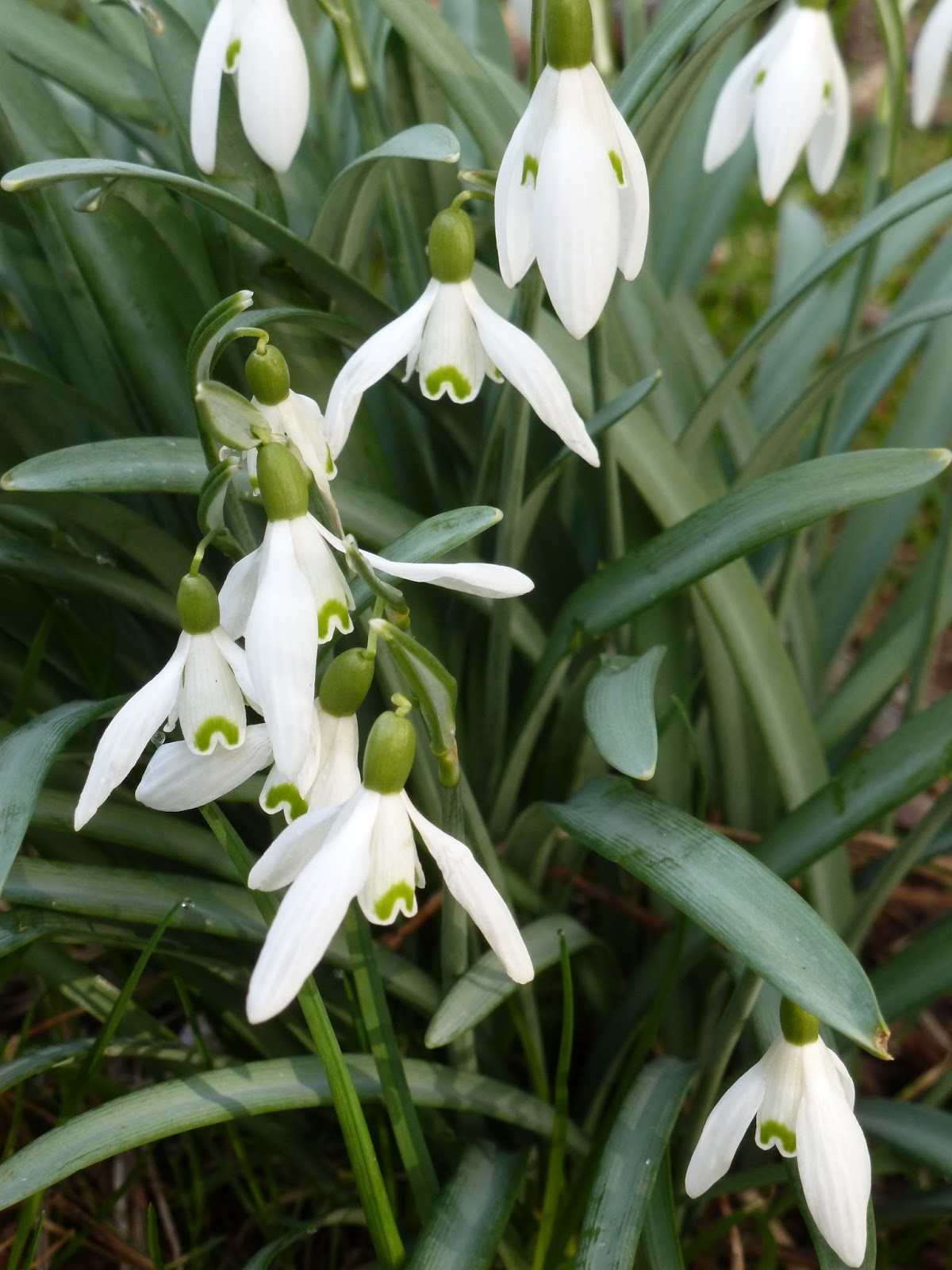
"Snowdrops were out in profusion..." 

Thursday, 8 October 2015

From Darkness

Fair Isle, anyone?
Is it me or is this one big "crime thriller" cliche after another? It's The Killing meets Morse meets Luther meets Prime Suspect. (Though there are currently no suspects.) Here's a gruff Cockney cop with an Oxbridge sidekick who has a phobia of blood. Here's a brooding ex-cop staring towards the distant horizon, running away and running some more. (She probably needs some nice Fair Isle sweaters too, living where does.) Here are prostitute bones unearthed by an excavator.

We flit between grimy, rainy Manchester and a beautiful remote Scottish island. Red wine is slurped but not spilled over police files. And at an overly attended pub ceilidh for an island of 38 residents, the brooding ex-cop finally smiles. (There must be a lock-in.)

The brooding ex-cop now bakes biscuits for a living. And to burn off the biscuits, she trains to be an Iron Woman. Not an Iron Lady. Or an ironing lady. Hence the running. No metaphor whatsoever.

And yet she doesn't want to be reminded of the girls she "let down" 15 years ago. She doesn't want to talk about it. But the gruff cop says she has to. She is the only one who "knows". And the killer is still killing, though seemingly - and conveniently - not for the 15 years in between. The latest victim dies with the brooding ex-cop's lapel number clutched in her fist.

It's enough to suck you in. It truly is. But it also doesn't seem very original.

The scenery is gorgeous though. No rain on these Scottish islands, just never-ending sunshine and light. No midges either. You wouldn't wish to be anywhere else, if it looked like that all the time and you weren't likely to be attacked by a vicious cloud of insects the moment you set foot out the door.

From Darkness took me back to my last ever family holiday in 1995, staying in a possibly haunted cottage on the road between Fort William and Mallaig. The walls were lilac and despite the midnight twilight, the cottage was full of the eponymous darkness. We occupied the long evenings with arguments, bad Mills & Boon novels and a very large jigsaw - the only entertainment provided, other than midges.
Glenfinnan

Glen Coe
By day, we saw lochs a-plenty - Linnhe, Morar, Shiel. And locks a-plenty - at Neptune's staircase on the Caledonian Canal. We went walking in Glen Coe and Glen Nevis. At the latter we picked up two teenagers and their tent, the teenagers pock-marked by midge bites from head to toe. We saw the monument of Bonnie Prince Charlie and the railway viaduct crossed by the Hogwarts Express at Glenfinnan. And as for the islands, we went to Mull, Eigg and Iona.

Eigg was boilingly sunny, and dolphins and minke whales swam alongside our boat. Upon landing, a tractor serving as the island's bus service drove us to the Singing Sands. Singing sands really meant squeaking sands and it took vigorous foot friction to get any sound at all. Not that you can complain about anything when this is the view:

Singing Sands on Eigg

And on these islands there was also death. On a misty Iona we made a pilgrimage to John Smith's grave. He had died only the year before. The grave was shrouded in mist, a slab of rock marked by flowers, solitary pebbles and the words "An honest man's the noblest work of God."
Iona

At Aonach Mor, working the chairlift was a climber's husband, being interviewed by ITN and waiting for news. His wife Alison Hargreaves perished that week in a snowstorm on the side of K2. We were on the slopes of a sunny Ben Nevis, which people were ascending in sandals and stilettos. She had both conquered and been destroyed by a brutal mountain on the other side of the world, in almost the same breath. And her body had not yet been found.

Ben Nevis

Aonach Mor